7 Urgent Furnace Repair Signs to Watch Before Cold Weather Hits
The most critical furnace repair signs include unusual noises like banging or squealing, a yellow burner flame, rapid short cycling, blowing cold air, persistent burning or chemical odors, and unexplained energy bill spikes. Identifying these symptoms early allows you to resolve minor component wear before it leads to mid-winter breakdowns or safety hazards.
Heating and cooling make up about 50% of the average American home’s energy costs. When winter temperatures drop across Augusta County, Rockingham County, and Albemarle County, your HVAC system works hard to keep your home warm. Over 40% of U.S. households rely on natural gas furnaces, and another 36% use electric systems. Catching mechanical wear and combustion issues early prevents middle-of-the-night heating failures when temperatures plunge.
1. Acoustic Furnace Repair Signs: Banging, Squealing, and Rattling
A healthy furnace operates with a steady, low hum. When mechanical parts loosen or wear out, the system produces distinct noises that indicate specific internal faults. Logging the timing and rhythm of these sounds helps technicians pinpoint the source quickly.
- Banging or booming at startup: A loud bang right when the heating cycle starts often points to delayed ignition. Dust or soot buildup on the burners delays the gas from lighting immediately. Gas builds up inside the combustion chamber and ignites all at once, creating a small mini-explosion. This stresses internal components and can crack the heat exchanger over time.
- High-pitched squealing or screeching: Sustained squealing typically signals dry motor bearings in the inducer or blower assembly, or a loose, fraying fan belt on older belt-driven units. If left unaddressed, the bearing can seize entirely, causing the blower motor to burn out.
- Rattling and metal vibrations: Rattling usually comes from loose access panels, failing motor mounts, or an unbalanced blower wheel. In serious cases, a metallic rattle that changes speed as the furnace warms up can indicate a cracked heat exchanger expanding under thermal stress.
- Repetitive clicking without ignition: Rapid clicking at the beginning of a cycle indicates an electrical spark or hot surface igniter trying and failing to light the burner.
If you hear sounds your system did not make last winter, it is wise to catch furnace issues before a mechanical part breaks down completely.
2. Combustion Issues: Yellow or Flickering Pilot Light
Gas furnaces rely on a precise balance of oxygen and fuel to burn cleanly. A healthy burner flame burns steady and bright blue, occasionally with a tiny yellow tip.
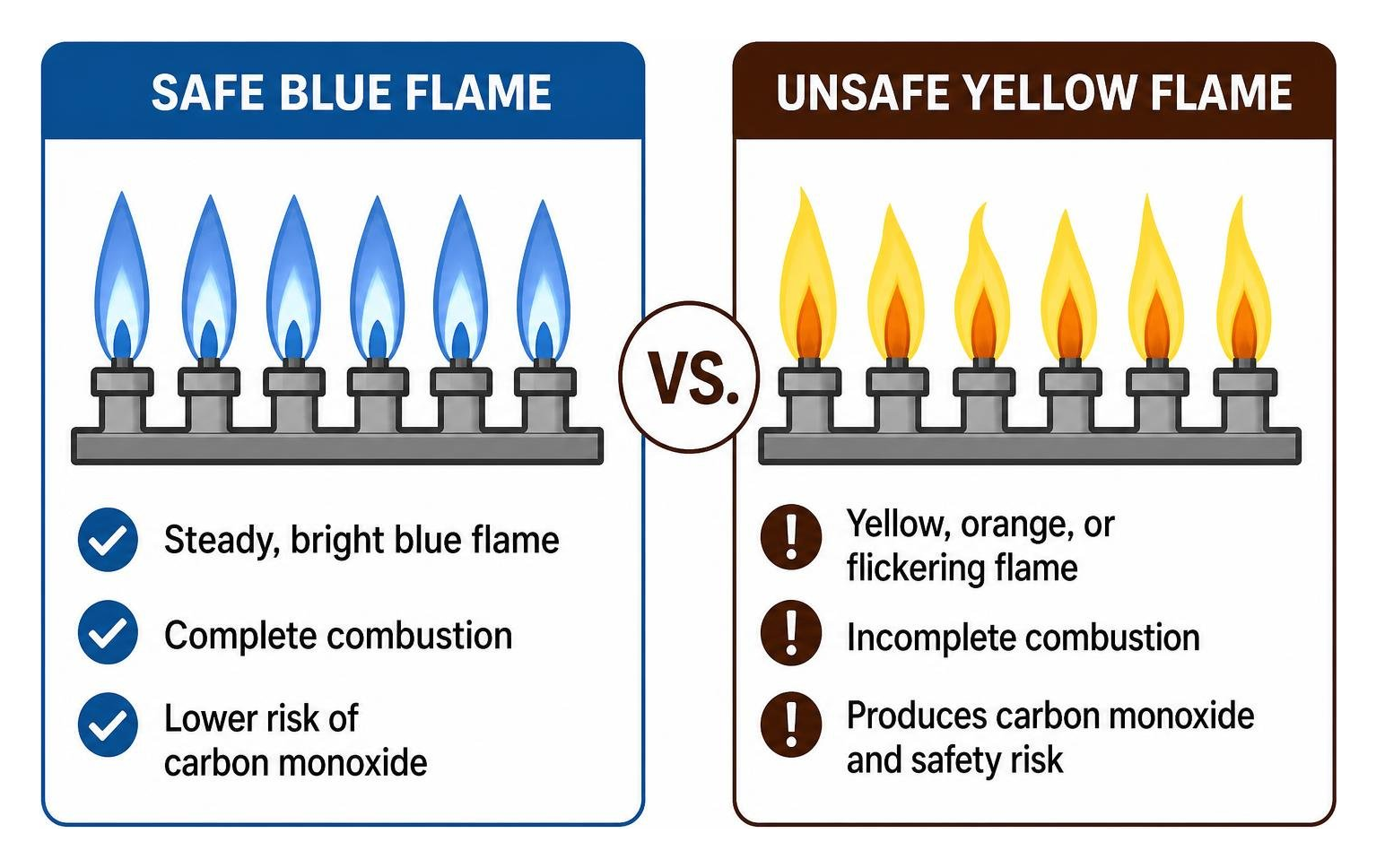
If the flame appears solid yellow, orange, or flickers erratically, it indicates incomplete combustion. This happens when burners become coated with dirt, air intake vents get obstructed, or the gas valve delivers incorrect fuel pressure.
Incomplete combustion produces carbon monoxide (CO), a colorless, odorless, and toxic gas. If you observe yellow flames, notice soot accumulating around the burner access door, or hear your carbon monoxide detector sound, follow essential furnace safety steps: switch off the furnace immediately, ventilate the area, and call a professional technician for an inspection.
3. Rapid Short Cycling and Frequent System Restarts
Under normal conditions, a residential furnace runs for 10 to 15 minutes per cycle to distribute heat evenly before shutting down. Short cycling happens when the furnace turns on, runs for only 2 to 4 minutes, abruptly shuts down, and attempts to restart a few moments later.
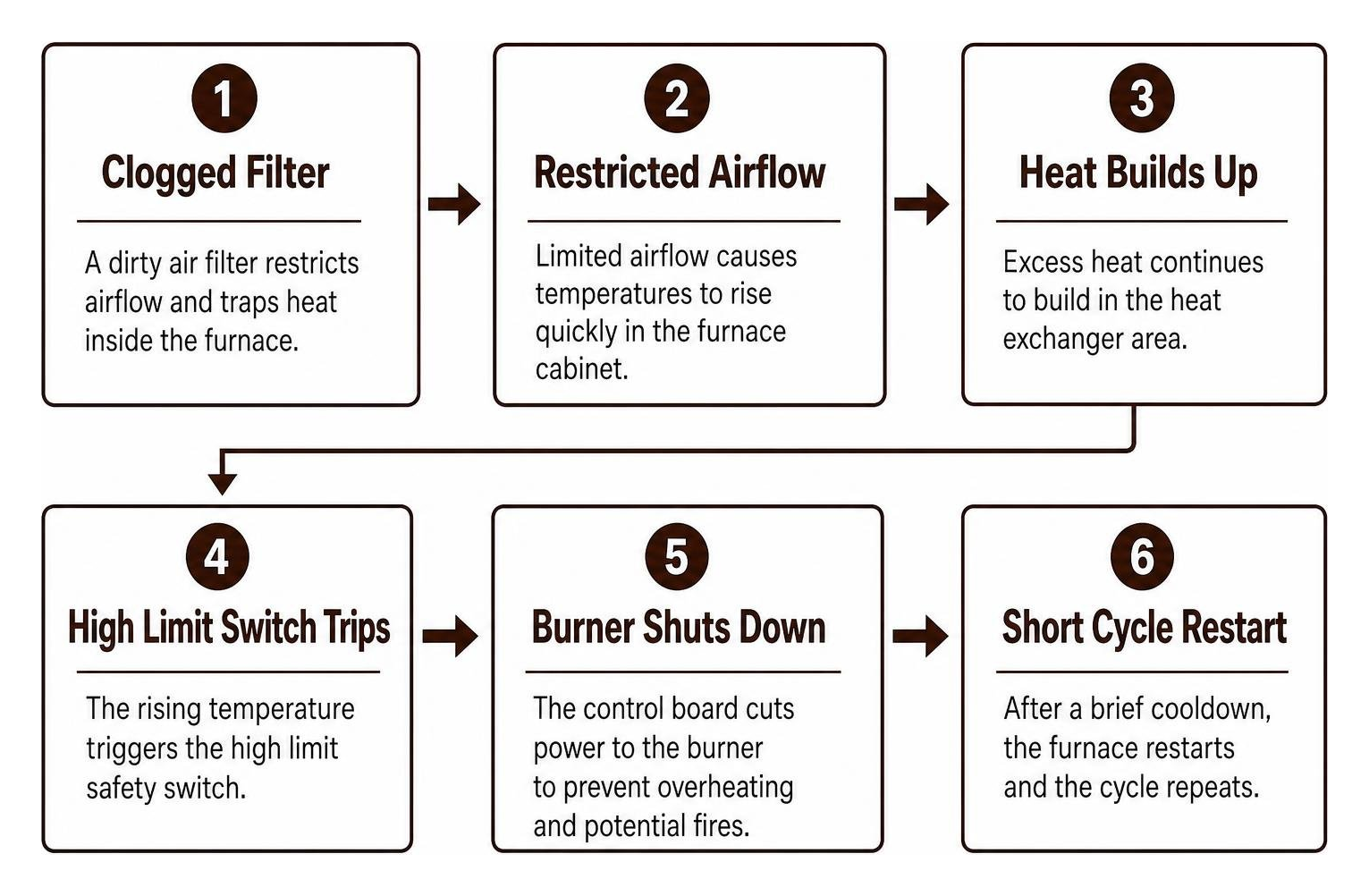
Short cycling causes high electrical consumption and accelerates component wear because every startup demands more power than steady-state operation. Common causes include:
- Restricted airflow: A clogged air filter or blocked return registers trap heat inside the cabinet, tripping the high-limit safety switch to prevent equipment fires.
- Dirty flame sensors: A flame sensor coated in oxidation or carbon buildup cannot detect the burner flame, causing the control board to cut fuel supply within seconds as a safety precaution. Dirty flame sensors account for roughly 30% of all “furnace won’t stay on” service calls.
- Overheating blower components: If the air handler struggles to move air due to a furnace blower motor failing, heat builds up rapidly in the heat exchanger, triggering an immediate shutdown.
- Improper system sizing: An oversized furnace produces heat too quickly for the home’s square footage, satisfying the thermostat before circulating warm air into distant rooms.
4. Airflow and Temperature Furnace Repair Signs: Blowing Cold Air
When your thermostat calls for heat, the air coming from your supply registers should feel warm within a couple of minutes. If the system blows cool or lukewarm air continuously, several mechanical or electrical faults could be responsible:
- Thermostat fan configuration: Check if the thermostat fan setting is toggled to “ON” instead of “AUTO.” When set to “ON,” the blower fan runs 24/7, circulating room-temperature air even when the burners are off.
- Failed hot surface igniter: Modern furnaces use an electronic igniter that glows red-hot to light the gas. These igniters have a limited lifespan and can crack or burn out, preventing the burners from lighting while the blower fan continues to blow unheated air.
- High-limit switch lockout: If the furnace overheated during a previous cycle, the safety control may lock out the burners while running the fan continuously to cool the cabinet.
Understanding why your furnace is blowing cold air helps you check basic thermostat settings before calling for a professional diagnostic visit.
5. Persistent Burning Smells and Chemical Odors
It is common to smell burning dust during the very first furnace cycle in autumn. As your system sits idle through the spring and summer, a thin layer of household dust settles across the burners and heat exchanger. This initial odor usually clears within an hour or two.
Odors that persist beyond the first few cycles, or smell chemical in nature, point to mechanical or electrical faults:
- Electrical or metallic odor (burning plastic/ozone): Indicates overheating wiring, melting wire insulation, or a failing motor winding. Shut the furnace off at the circuit breaker immediately.
- Chemical or formaldehyde scent: Often indicates a cracked heat exchanger. As combustion gases mix with circulating air, unpleasant chemical fumes enter the living space.
- Rotten egg or sulfur smell: Natural gas is naturally odorless, so utilities add mercaptan to make leaks easy to detect. If you notice a sulfur or rotten egg smell, evacuate the house immediately and call your gas provider from a safe location.
Learning about strange furnace smells at home can help you tell routine dust burn-off from an electrical hazard.
6. Unexplained 15% to 20% Energy Bill Spikes
Heating and cooling make up half of a household’s annual energy expenditure. While winter bills naturally increase as outdoor temperatures drop, your energy usage should track closely with previous years under similar weather conditions.
A sudden 15% to 20% increase in gas or electric costs without a change in household habits often indicates failing internal components. When burners become dirty, blower wheels collect grime, or duct connections develop leaks, the furnace must run longer cycles to reach your set temperature.
Professional furnace repair can identify worn parts, airflow restrictions, and ignition problems before they drive up winter energy use. Seasonal tuneups and timely diagnostics keep your heating system running efficiently and can lower your monthly bills.
7. Visible Rust, Soot Buildup, and Uneven Room Temperatures
Physical changes on and around your furnace cabinet provide valuable clues about internal operating conditions.
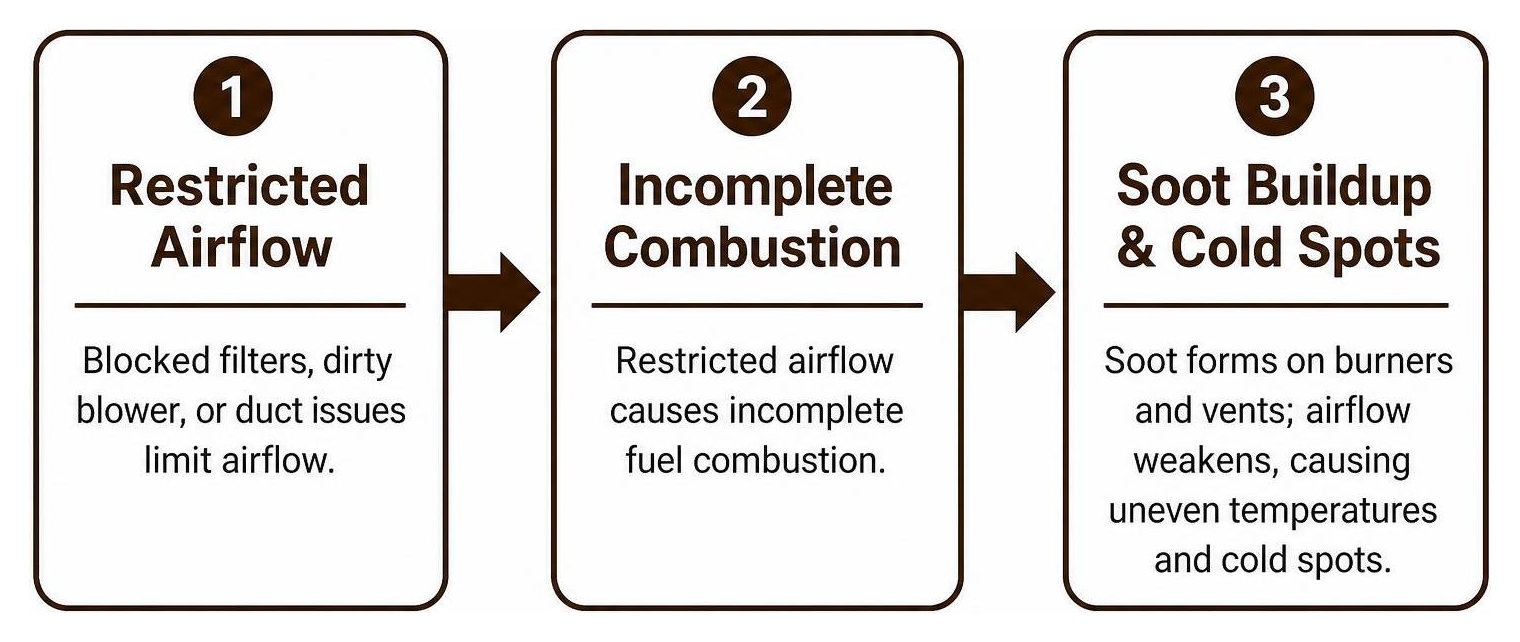
- Visible rust and corrosion: Condensation from high-efficiency venting pipes or a leaking flue collector box can cause corrosion on the furnace cabinet and burner assembly. Rust flakes falling into burner ports disrupt fuel delivery and combustion.
- Black soot deposits: Soot around the burner access panel, exhaust vent, or register grates indicates incomplete fuel combustion and venting issues.
- Cold spots and weak airflow: If some rooms feel freezing while others overheat, the blower fan may be struggling, the ductwork may have leaks, or static pressure could be out of balance.
If you notice uneven temperatures from room to room, exploring ways of addressing uneven heating at home can restore consistent comfort throughout your living space.
Safe DIY Troubleshooting Checks Before Scheduling Service
Before calling for a repair appointment, you can run through a few basic checks safely on your own:
- Check the air filter: Inspect your furnace air filter against a bright light source. If it is dark, dusty, and opaque, replace it with a fresh filter to restore proper airflow.
- Verify thermostat settings: Ensure your thermostat is set to “HEAT,” the target temperature is at least 5 degrees above the current room temperature, and the display has fresh batteries.
- Check the electrical switch and breakers: Verify that the power toggle switch on or near the side of the furnace cabinet is switched to “ON.” Inspect your main electrical panel to confirm the heating circuit breaker has not tripped.
- Inspect supply and return registers: Make sure all supply vents and large cold-air return grilles across your rooms are open and unobstructed by rugs, furniture, or drapery.
- Look for water in the drain pan: On high-efficiency (90%+ AFUE) units, inspect the condensate drain line for standing water or blockages that could trip a float switch.
If you have completed these basic checks and the unit still shuts down or overheats, learn what to do when a furnace overheats and schedule a professional inspection.
Repair vs. Replace: Deciding the Best Path for Your Heating System
When facing unexpected heating issues, deciding whether to repair a worn component or invest in a new unit comes down to equipment age, repair costs, and energy efficiency. Most residential furnaces have an operational lifespan of 15 to 20 years.
| Decision Factor | Keep and Repair Current Furnace | Replace with High-Efficiency System |
|---|---|---|
| System age | Under 10 to 12 years old | Exceeds 15 to 20 years old |
| Repair cost threshold | Repair costs are below 50% of system value | Repair estimate exceeds 50% of new unit cost |
| Repair frequency | First repair in several seasons | Multiple component breakdowns in consecutive winters |
| Heat exchanger condition | Sound, crack-free, intact | Cracked, corroded, or leaking combustion gases |
| Energy efficiency (AFUE) | System operates close to original rating | Upgrading to 90%+ AFUE offers major monthly energy savings |
If your equipment is approaching the end of its useful lifespan, furnace replacement can deliver quieter operation, consistent temperatures, and lower energy costs.
Frequently Asked Questions About Heating Repair
What is the most common reason a furnace won’t stay on?
The most common cause of a furnace shutting down shortly after lighting is a dirty flame sensor rod. Over time, microscopic oxidation and carbon buildup coat the sensor, preventing it from detecting the burner flame. The control board interprets this as a flame failure and closes the gas valve within seconds for safety. Restricted airflow from a clogged air filter is another frequent cause, tripping the high-limit switch to prevent the system from overheating.
Is a yellow burner flame an immediate safety hazard?
Yes. A healthy natural gas or propane burner flame should burn steady and blue. A solid yellow or orange flame indicates incomplete combustion, meaning fuel is burning without adequate oxygen. Incomplete combustion generates carbon monoxide, which can enter your home if the heat exchanger is compromised or venting is blocked. If your furnace burner flame is yellow, shut the system down and arrange for a professional diagnostic inspection.
When does replacing a furnace make more financial sense than repair?
Replacing a furnace makes better financial sense when the system is more than 15 years old and the cost of repair approaches or exceeds 50% of the price of a new installation. Major component failures, such as a cracked heat exchanger or a seized blower motor paired with a failing control board, are rarely cost-effective to repair on aging units. Upgrading to a modern condensing furnace delivering over 90% AFUE efficiency reduces monthly utility bills and prevents recurring winter repair expenses.
Stay Ahead of Furnace Issues This Winter
Catching heating problems early protects your home from sudden mid-winter breakdowns, high utility bills, and carbon monoxide hazards. Addressing subtle warning signs, like strange noises, rapid cycling, weak airflow, or unusual odors, ensures your heating system runs dependably all winter long.
All-Temp Heating & Cooling provides prompt, thorough diagnostics and repairs for homeowners across Staunton, Harrisonburg, Waynesboro, Charlottesville, Stuarts Draft, Fishersville, and surrounding Shenandoah Valley communities. Our team supports every job with honest recommendations, modern diagnostic tools, and a two-year labor warranty on our services.
To schedule seasonal maintenance or heating diagnostics, contact our furnace repair specialists before the first cold snap arrives.