
Understanding Uneven Heating in House and Comfort Dynamics
When you walk from a cozy living room into an ice-cold bedroom, your home struggles with temperature distribution. Experiencing uneven heating in a house often comes down to airflow restrictions, insulation gaps, and thermostat feedback errors. Achieving true thermal balance requires steady airflow, proper heat loss prevention, and accurate temperature sensing across every room. Nearly half of a typical residential energy bill goes toward heating and cooling, which makes hot and cold spots both frustrating and expensive.
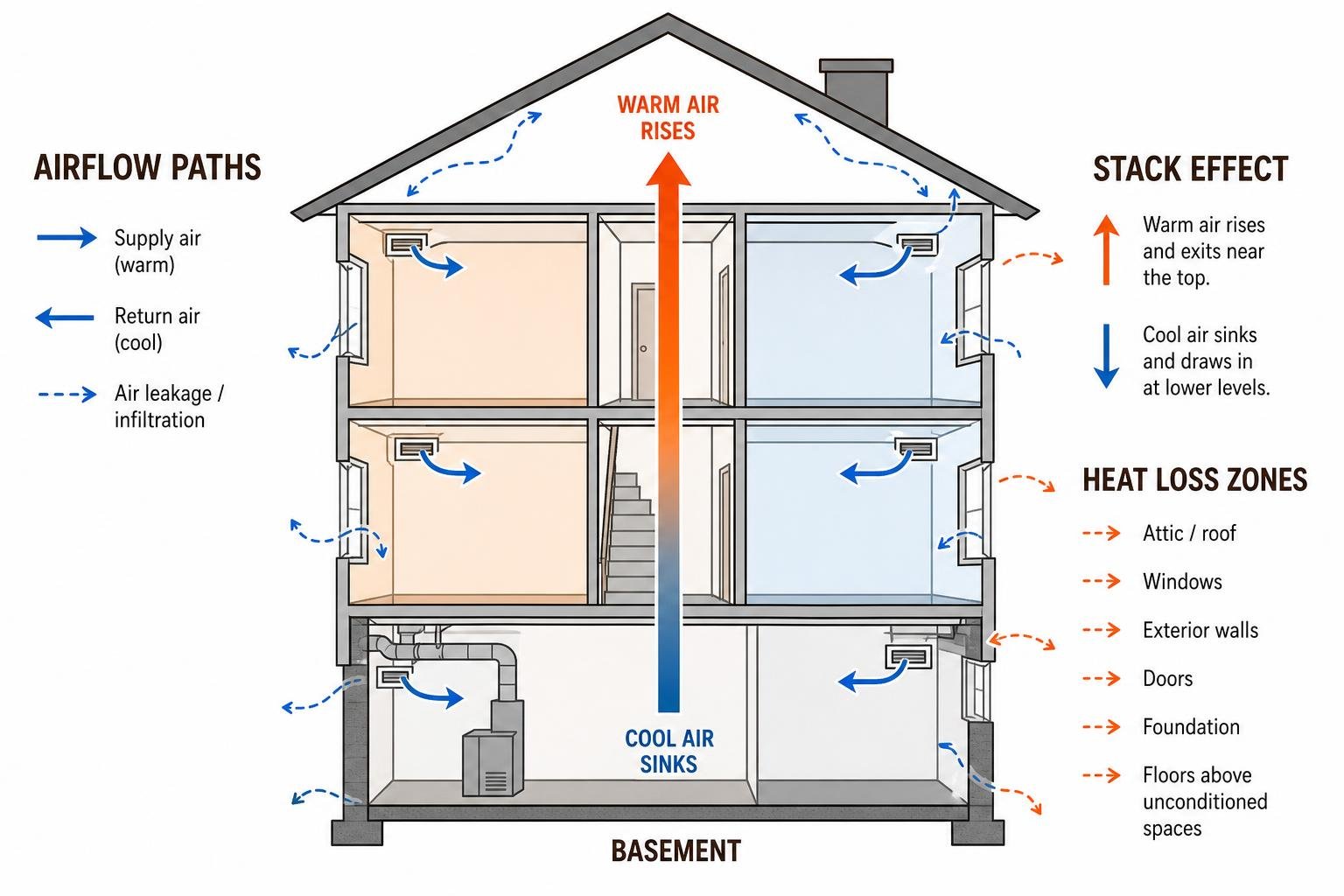
Heat moves naturally from warm areas to cool areas. When parts of your building envelope leak heat faster than your HVAC system delivers warm air, distinct microclimates form inside your living spaces. Rooms on upper floors, exterior corners over unconditioned spaces, and areas far from the air handler often feel the biggest temperature swings. Understanding the basic physics of residential heat transfer helps you pinpoint why certain rooms never seem to reach a comfortable temperature.
7 Major Causes of Hot and Cold Spots Across Your Living Space
Temperature differences stem from three main areas: your heating equipment, the duct distribution network, and the building structure itself. Here are the seven primary culprits behind uneven room temperatures.
1. Airflow Restrictions and Blocked Supply Registers
Your furnace or heat pump requires a constant volume of circulating air to maintain stable temperatures throughout your home. When something chokes off that air, distant rooms quickly turn cold.
- Closed or Obstructed Vents: Furniture, rugs, and heavy drapes sitting over floor or wall registers prevent warm air from entering the room.
- Clogged Air Filters: Dust-choked filters reduce overall system airflow velocity, causing the rooms farthest from the air handler to starve for heat.
- Closed Internal Doors: Shutting bedroom doors without dedicated return grilles creates high air pressure, which resists incoming warm air from the supply register.
2. Duct Defects and Air Leakage
Your ductwork functions as the circulatory system of your home. If the pathways fail, heat cannot reach its intended destination. According to data from the U.S. Department of Energy, the average home loses 20% to 30% of the air moving through its duct system due to leaks, holes, and poor connections.
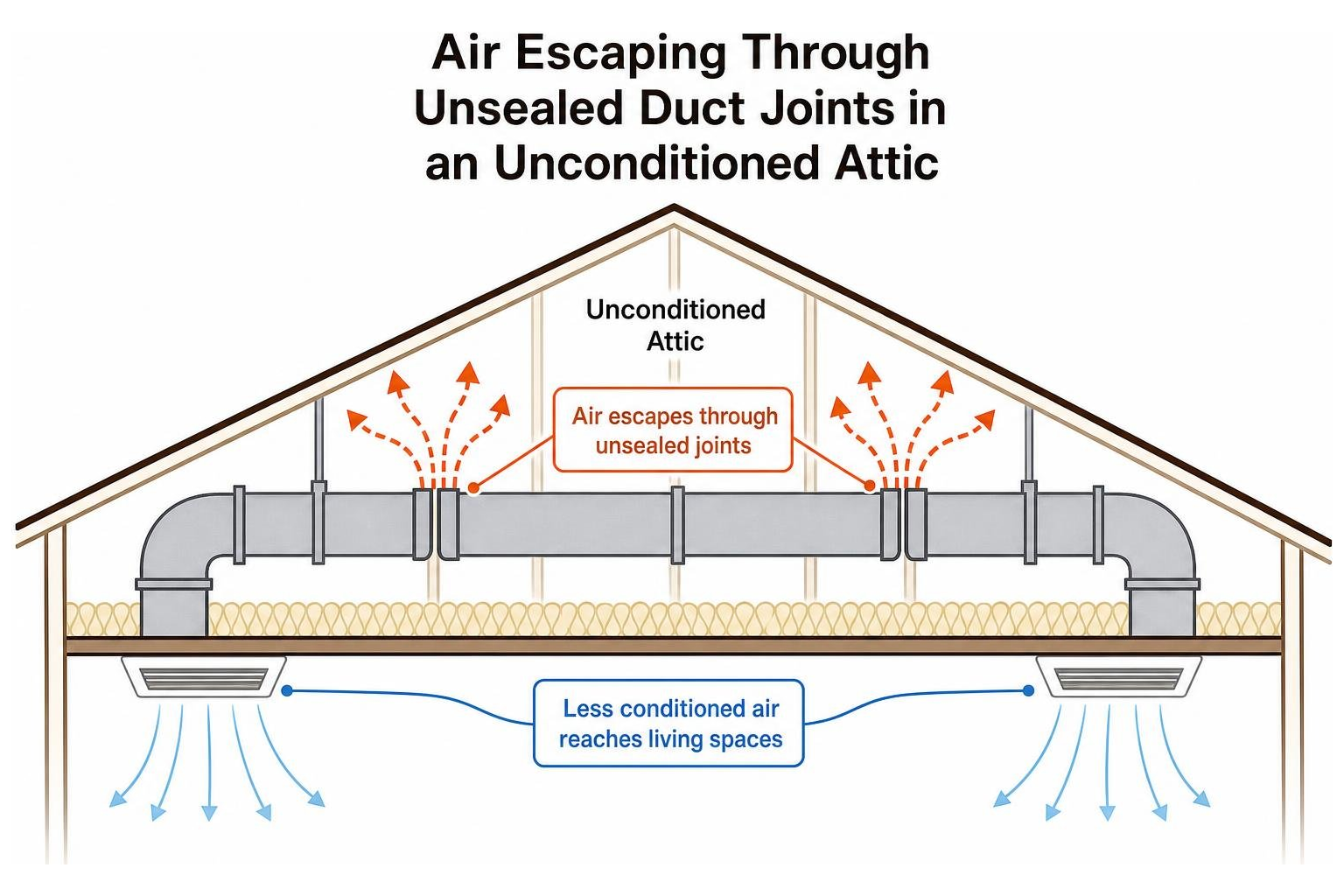
When conditioned air escapes into unheated attics, basements, or crawl spaces, long duct runs deliver lukewarm air to exterior bedrooms. Minor seam gaps can lead to major heat loss, so air duct leak repair often starts with a close inspection of accessible joints and branch connections.
Our team also provides professional ductwork services to correct undersized supply trunks, fix pinched flex ducts, and reconnect separated branch lines.
3. Poor Thermostat Placement and Single-Zone Limitations
A standard single-zone HVAC system relies on a single thermostat to regulate temperatures for the entire house. If your thermostat is installed in a central hallway, near a kitchen, or in direct sunlight, it registers a false reading. The system shuts off early because the hallway feels warm, leaving exterior bedrooms and remote living areas shivering without adequate heat delivery.
4. Inadequate Insulation and Building Envelope Air Leaks
Even the most efficient heating system cannot keep a room warm if the building envelope allows heat to escape rapidly. Poor attic insulation, unsealed recessed lights, thin exterior wall cavities, and drafty window frames cause intense thermal bridging. Rooms with high exterior wall exposure lose heat faster than the HVAC system can replace it, creating persistent cold spots.
5. Multi-Story Stack Effect and Solar Heat Gain
Warm air is naturally less dense than cold air, which creates a natural convection cycle called the stack effect in two-story and multi-level homes. Warm air rises into the upper levels and escapes through the attic ceiling plane, while drawing cold outdoor air in through basement and main-floor crevices. Meanwhile, south-facing rooms absorb radiant solar heat during sunny afternoons, while north-facing rooms remain freezing.
6. Aging, Failing, or Improperly Sized Heating Equipment
When heating equipment is too large for a home, it rapidly heats the area closest to the thermostat and shuts down before warm air circulates to distant rooms. Conversely, an undersized or aging system lacks the blower power and thermal output to reach far corners. Homeowners can schedule heater repair diagnostics to evaluate blower motor strength and heat exchanger health.
Investing in comprehensive heating services ensures your equipment is correctly sized using precise Manual J heating load calculations.
7. Hydronic Imbalances in Boilers and Baseboard Radiators
In homes with hot water boilers or steam radiators, uneven warmth usually stems from air pockets trapped inside the piping or radiator units. When air bubbles block hot water circulation, the radiator stays cool to the touch even when the boiler runs at full capacity. Faulty zone valves, sticking thermostatic radiator valves, and unbalanced plumbing loops also cause substantial temperature variations between rooms.
How to Diagnose the Root Source of Temperature Imbalances
Finding the exact cause of uneven temperatures requires a structured diagnostic approach. Use this table to match your symptoms with the most likely problem and testing method.
| Symptom | Primary Suspect | Recommended Diagnostic Test |
|---|---|---|
| Weak airflow from distant supply vents | Duct leaks or clogged air filter | Hold a tissue at the register to gauge airflow velocity |
| One room cools down immediately after heat stops | Missing insulation or drafty window | Inspect wall surfaces with an infrared thermometer |
| Upstairs stays hot while main floor stays cold | Stack effect and poor thermostat placement | Log temperatures on both floors simultaneously |
| Furnace runs for 3 minutes and shuts off | Oversized equipment or overheating limit switch | Measure temperature split (Delta-T) across supply/return |
| Cold radiator unit while boiler is running | Trapped air in hydronic lines | Bleed radiator valve using a radiator key |
Practical DIY Fixes vs. Long-Term Professional Solutions
Homeowners can resolve mild temperature swings with basic maintenance, while structural and mechanical flaws require specialized HVAC solutions.
Fast DIY Adjustments for Immediate Temperature Balance
Before scheduling major repairs, you can try several straightforward steps to balance your indoor climate. For additional ideas, this guide on simple fixes for uneven room temperatures offers more helpful tips:
- Replace Your Air Filter: Install a clean, correctly sized filter every 60 to 90 days to maintain optimal system airflow volume.
- Reverse Ceiling Fans: Set ceiling fans to rotate clockwise at low speed in winter to push rising warm air back down toward the living zone.
- Adjust Supply Louvers: Slightly close registers in rooms that receive excess heat to force more airflow toward colder, distant rooms.
- Seal Window Drafts: Apply self-adhesive weatherstripping and door sweeps around drafty exterior frames to block outdoor air infiltration.
- Use Smart Thermostat Room Sensors: Remote wireless sensors average readings across multiple living areas, reducing hot and cold swings significantly.
Advanced HVAC Upgrades: Zoning, Sealing, and Supplemental Units
When duct geometry or home construction prevents balanced airflow, professional mechanical upgrades provide dependable, permanent comfort.
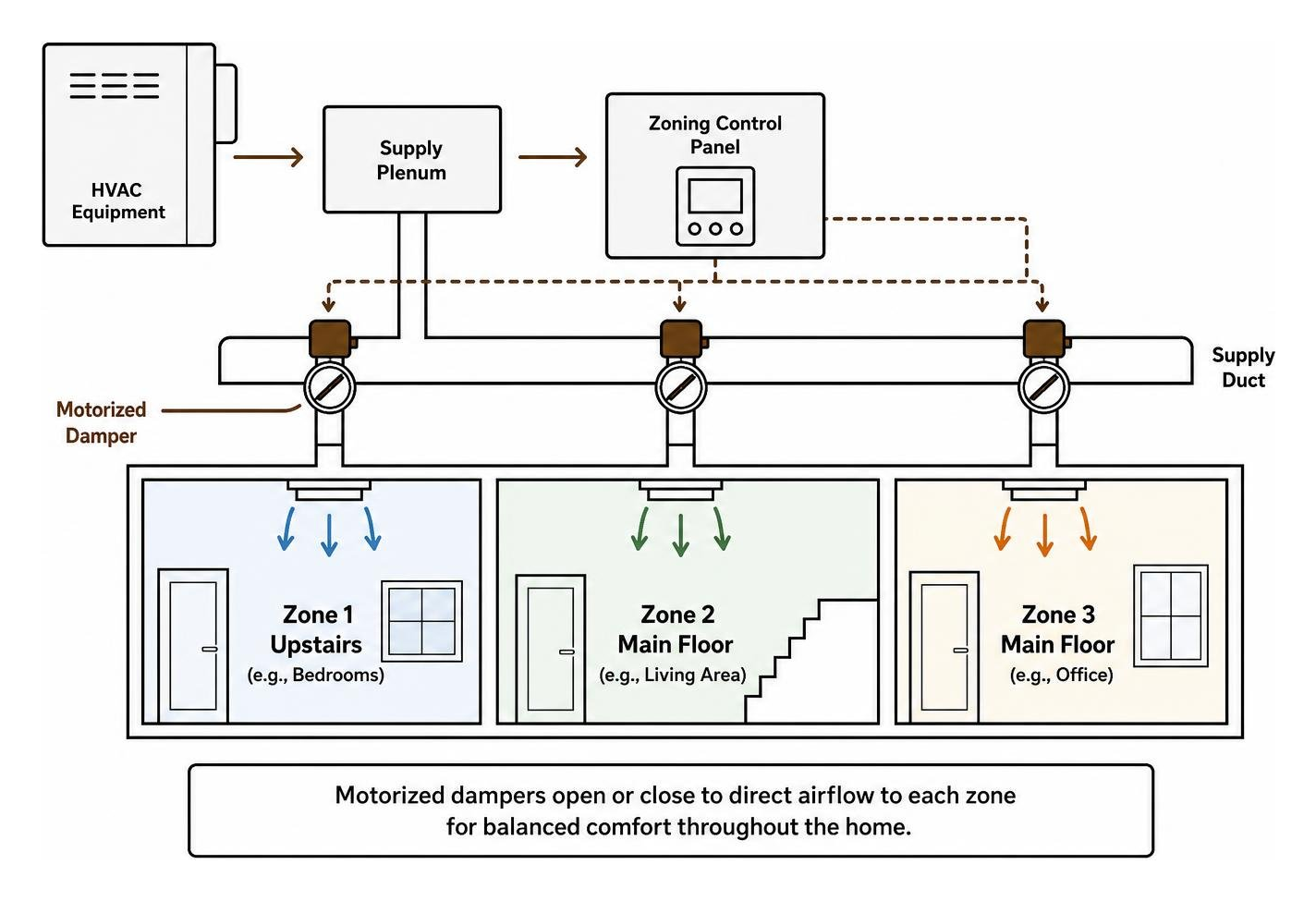
Our team offers targeted duct sealing services to close hidden leaks in attics and crawl spaces using commercial-grade mastic sealant. Properly sealing and insulating ductwork can reduce overall energy costs while delivering consistent temperatures.
For challenging additions, finished basements, converted garages, or upper-floor bedrooms, installing a ductless mini-split provides independent temperature control without modifying existing duct trunks.
Homeowners can apply strategic methods for addressing uneven heating throughout the home to ensure every room stays cozy all winter long.
Frequently Asked Questions About Uneven Heating
Why is the upstairs always significantly warmer than the downstairs during winter?
Warm air naturally rises to the upper level of your home through convection, while cool air settles downstairs. Because central thermostats usually sit on the main floor, the furnace keeps running until the main floor reaches its setpoint, which overheats the second floor in the process.
Can closing vents fix uneven heating in a house?
Closing supply registers in unused rooms creates excessive static pressure inside your ductwork. This high pressure can blow open duct seams, overwork your blower motor, and cause your furnace heat exchanger to crack from overheating. It is safer to keep all supply vents open or adjust louvers only slightly.
How many degrees of temperature difference between rooms is considered normal?
A variance of 2°F to 3°F between separate rooms is normal in most residential construction. However, a temperature spread of 5°F or higher indicates serious airflow restrictions, duct leakage, or insulation deficiencies that warrant a professional inspection.
Restoring Balanced Temperatures and Whole-Home Comfort
Steady, balanced heat keeps your living space comfortable and protects your equipment from premature wear. All-Temp Heating & Cooling delivers dependable heating solutions across Staunton, Harrisonburg, Waynesboro, Stuarts Draft, Charlottesville, and surrounding communities in Augusta County and Rockingham County.
Our team performs detailed load calculations, duct repairs, and custom system balancing backed by our two-year labor warranty. When persistent cold spots point to deeper equipment issues, identifying signs your heating system requires expert intervention helps you make timely decisions before contacting our team to schedule an in-home evaluation.