
Radiator Not Heating Up? Start With These Checks
If your radiator is not heating up, check that the thermostat is calling for heat and the radiator valves are open. Cold at the top but warm at the bottom? Turn off the heat, let the radiator cool, and bleed it to release trapped air. Warm at the top but cold at the bottom? Sludge may be blocking water flow. If every radiator is cold, check the boiler’s pressure gauge and look for an error code. Call a heating professional if you find a leak or the heat still does not return.
At All-Temp Heating & Cooling, our team has helped local homeowners in Staunton, Virginia, diagnose heating problems for over 15 years, including a radiator not heating up.
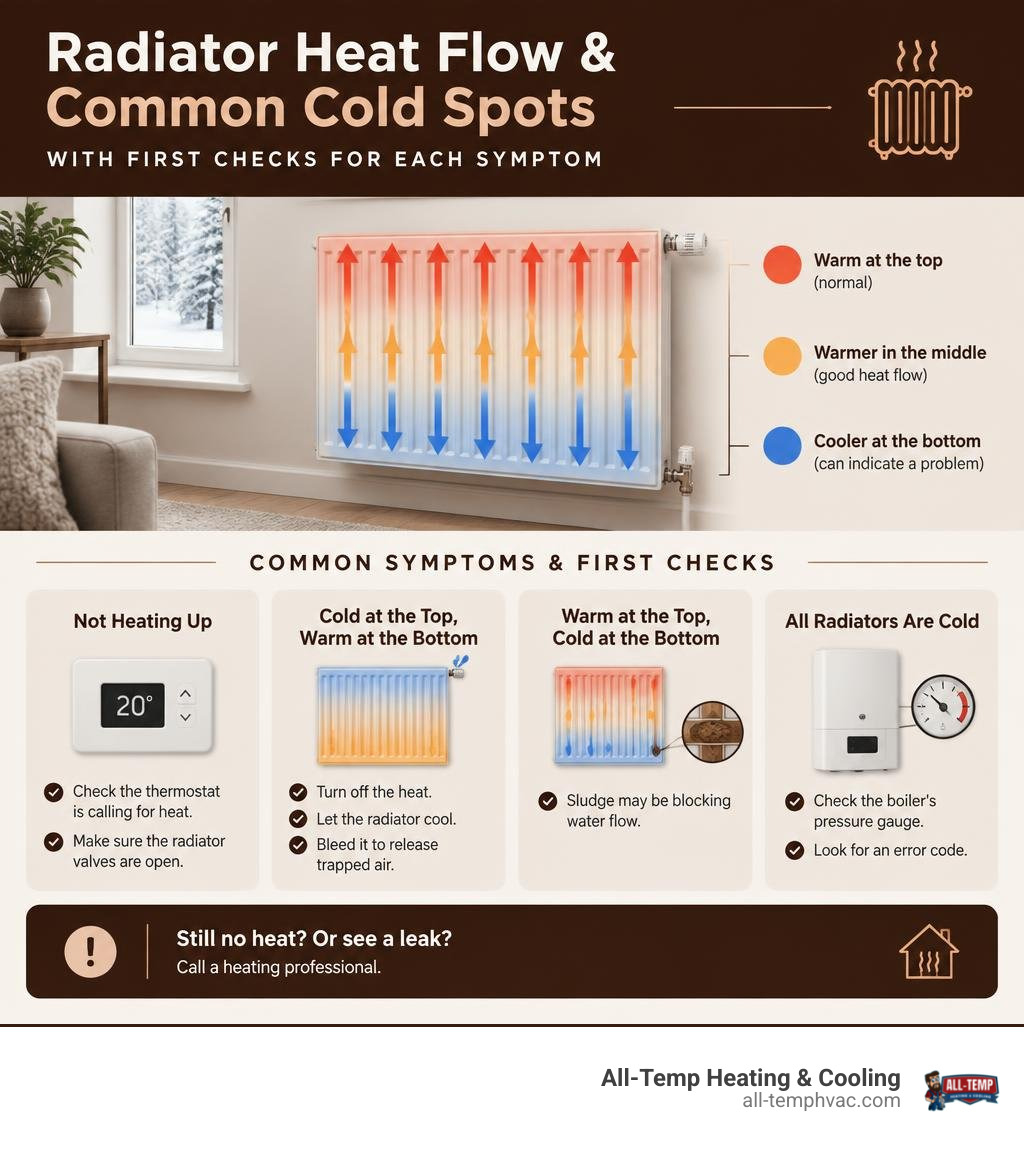
When a radiator stops heating, the temperature pattern across the metal often points to the cause. Air pockets, sludge, or a closed valve can all block water flow.
Catching hydronic issues early can help prevent wider damage when a heating system fails.
Why Is Your Radiator Not Heating Up? Common Causes by Symptom
When baseboard heaters or cast-iron units stay chilly in November 2026, the specific temperature pattern across the metal tells you what went wrong. Hydronic systems rely on continuous water flow from your boiler. If air, rust, or a closed valve stops that flow, heat cannot distribute evenly.
Before taking anything apart, feel the surface of the cold radiator from top to bottom. Comparing what you feel to common heating symptoms helps you pinpoint the root cause quickly.
| Radiator Symptom | Likely Root Cause | Quick Solution |
|---|---|---|
| Cold at the top, warm at the bottom | Trapped air pockets | Bleed the radiator with a key |
| Warm at the top, cold at the bottom | Rust and magnetite sludge buildup | Power flush or chemical clean |
| Completely cold all over | Closed valve or stuck TRV pin | Open lockshield or free the pin |
| All radiators in the house stay cold | Low boiler pressure or bad pump | Repressurize boiler or call a technician |
A radiator that stays cold after basic checks may have a circulation issue that needs professional diagnosis.
Why Is One Radiator Not Heating Up at the Top?
Air naturally rises to the highest point in your plumbing. When tiny air bubbles enter the water supply, they collect inside the upper chambers of your radiators. This air pocket pushes the hot water down and prevents it from filling the top section.
As a result, the bottom pipes feel warm while the upper half stays cold. Releasing trapped air through the bleed valve lets water rise back up and restore full heating.
Radiator Warm at the Top but Cold at the Bottom
If the top of your unit feels hot while the lower section stays cold, heavy debris is settling at the base. Over time, internal iron pipes corrode and mix with water to form a thick black sludge known as magnetite.
This heavy sludge settles at the bottom of the unit, creating a dense barrier that blocks fresh hot water from circulating through the lower channels. When sludge builds up across multiple rooms, addressing uneven heating in your home requires a professional system flush to protect your boiler pump from damage.
Completely Cold Radiator: Stuck Valves and Airlocks
A unit that stays completely cold while neighboring rooms stay warm usually suffers from a mechanical flow blockage. Every radiator features two main valves:
- A thermostatic radiator valve (TRV) or manual wheelhead valve on the water inlet.
- A lockshield valve hidden under a plastic cap on the return side.
If someone accidentally closed either valve, hot water cannot enter the radiator. Additionally, internal pins inside thermostatic valves often seize shut after sitting idle all summer. A severe airlock can also seal the inlet completely, preventing any water circulation.
How to Fix a Radiator That Isn’t Heating: Step-by-Step DIY Troubleshooting
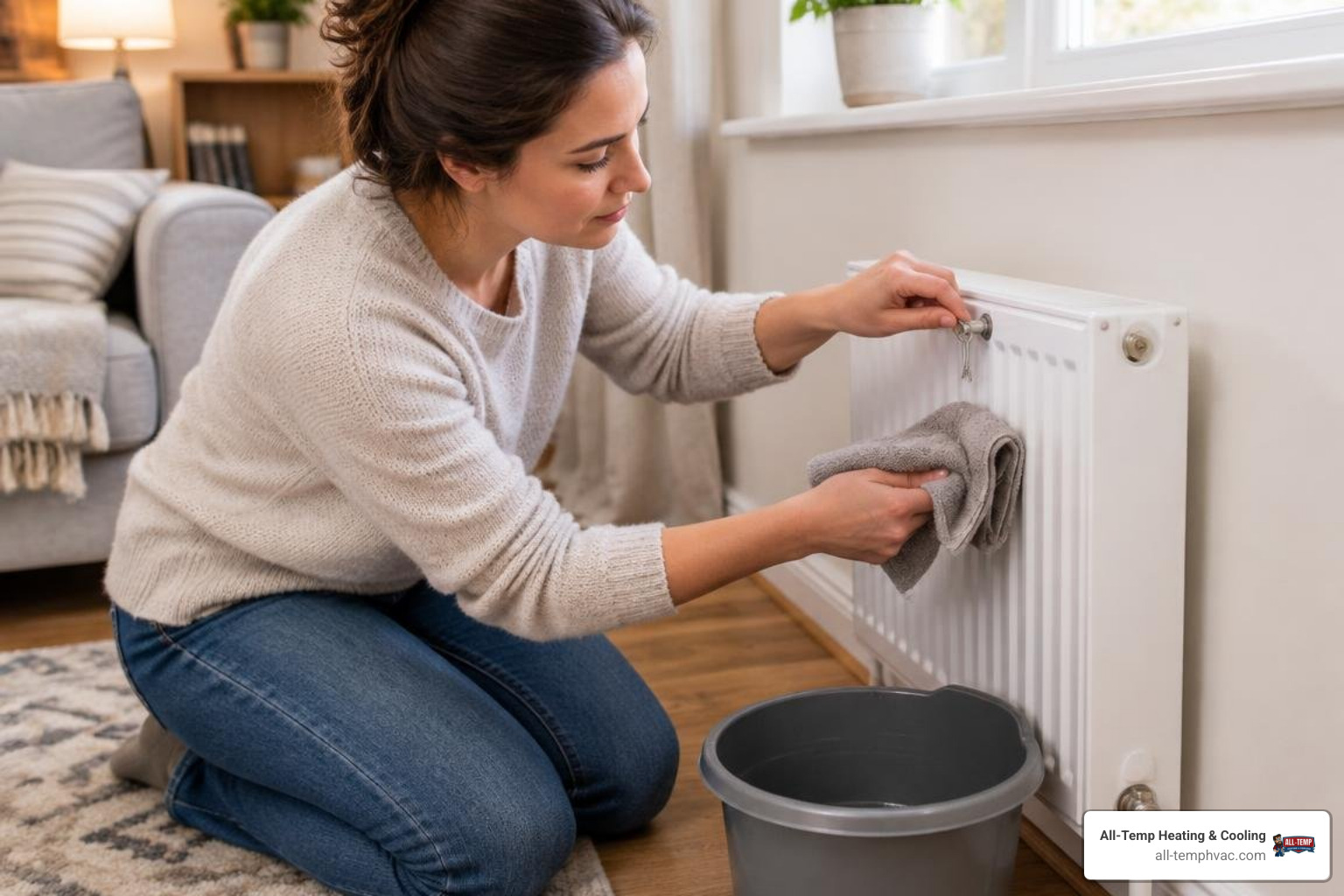
You can resolve many common heating problems safely with a few basic hand tools. Before attempting repairs, gather a radiator bleed key, a flathead screwdriver, an adjustable wrench, an old towel, and a small bucket.
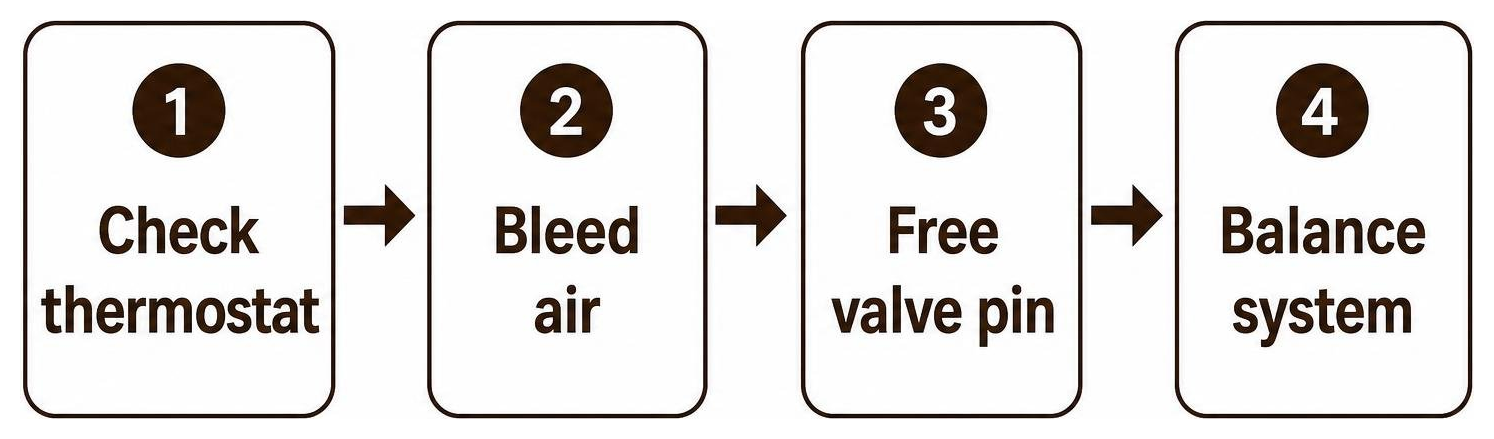
Always shut off your central heating system and allow the radiators to cool for twenty to thirty minutes before opening any valves. Working on a hot, pressurized system risks painful burns from escaping water and steam.
How to Safely Bleed Your Radiators
Bleeding removes trapped air pockets so water can fill the entire unit:
- Turn off your heating system at the master thermostat and let all radiators cool down.
- Locate the bleed valve near the top corner of the cold unit.
- Place a towel and catch bucket directly beneath the valve.
- Insert your radiator bleed key into the square valve slot and turn it counterclockwise by a quarter to half turn.
- Listen for a steady hissing sound as trapped air escapes.
- Once a solid stream of water starts dripping out, immediately turn the key clockwise to close the valve securely.
- Wipe away any moisture, check your boiler pressure gauge, and turn the central heating back on.
How to Check and Free a Stuck Thermostatic Radiator Valve (TRV)
A thermostatic valve uses a small internal metal pin to regulate water flow based on room temperature. When these valves sit closed for months, the pin often gets stuck in the down position.
Remove the plastic TRV head by unscrewing the retaining ring at its base with your fingers or water pump pliers. Look for the small, exposed metal pin underneath.
Gently press down on the pin with the flat side of a screwdriver. A working pin should depress slightly and spring back up on its own. If it stays down, tap the side of the brass valve body gently and apply a small drop of silicone lubricant around the base of the pin. Use pliers to wiggle the pin upward without pulling it out completely. Once it moves freely, reinstall the plastic cap.
Balancing Radiators Across Your Home
If radiators closest to your boiler get scorching hot while units at the far end of the house stay lukewarm, your heating system is out of balance. Balancing adjusts the return flow across every unit so heat distributes evenly.
Start by turning off the heating and letting the system cool. Open every TRV and lockshield valve across the house completely. Turn the heating on and make note of the order in which each radiator warms up.
Return to the first radiator that got hot, close its lockshield valve completely, and then open it just a quarter to half turn. Move down the line to the next units, opening their lockshield valves slightly wider as you get further from the boiler. This restriction forces hot water past the closest units and sends adequate flow to distant rooms in multi-story houses.
Central Heating and Boiler Problems: When All Radiators Stay Cold
When every radiator in your home fails to warm up, the issue lies with your central equipment rather than an individual valve. First, confirm that your master thermostat has fresh batteries, is set above current room temperature, and calls for heat.
Next, inspect your boiler or furnace control board for error codes, tripped circuit breakers, or an extinguished pilot light. Recognizing these critical signs you need heating repair helps you resolve central system failures before freezing weather damages household plumbing.
Scheduling routine boiler maintenance keeps your equipment running safely all winter and helps prevent sudden heating interruptions.
Single Radiator Not Heating Up vs. System-Wide Pressure Loss
Sealed hydronic heating systems depend on precise water pressure to move water to upper floors. Inspect the pressure gauge on the front of your boiler cabinet. When cold, the needle should sit steadily between 1.0 and 1.5 bar (around 15 to 20 psi).
If the gauge drops into the red zone, the boiler may not push water through the circuit, leaving radiators completely cold. A qualified technician can identify the cause of recurring low pressure and correct it safely.
Frequent pressure drops can point to small leaks around radiator joints or a failing pressure relief valve. Timely heater repair can help protect the system and restore reliable heat.
Signs of a Faulty Circulator Pump or Diverter Valve
A boiler that fires up but leaves your radiators cold often suffers from a broken circulator pump or a stuck diverter valve. The circulator pump forces heated water through the pipework. If you hear grinding noises from the boiler cabinet or feel an extremely hot boiler casing while the outlet pipes stay cold, the pump has likely failed.
In combination boilers, a motorized diverter valve switches water flow between domestic taps and central heating radiators. When this valve fails, you might get plenty of hot shower water while your radiators stay ice-cold, or vice versa. Diagnosing internal mechanical parts requires specialized equipment and fast boiler repair in Harrisonburg from a certified technician.
Frequently Asked Questions About Cold Radiators
Why is my radiator not getting hot after bleeding?
If you bled air from the unit and it remains cold, check your boiler pressure gauge. Bleeding releases water volume, which can drop system pressure below the operational threshold. Other common causes include a seized valve pin, heavy sludge blocking the inlet, or a severe system imbalance that starves that specific branch of water flow.
What is the correct water pressure for a residential boiler?
For most residential closed-loop systems, the pressure gauge should read between 1.0 and 1.5 bar when the system is cold. During active heating, pressure naturally rises toward 1.8 to 2.0 bar as water expands inside the lines. If pressure climbs above 2.5 bar, check your expansion tank for internal bladder failure.
Can low boiler pressure cause radiators to stop working?
Yes. Low water pressure creates a lack of hydraulic head in your heating loop. When pressure drops below 1.0 bar, water cannot fight gravity to reach upper-floor radiators. Modern boilers also feature built-in pressure safety switches that lock the burner out completely to prevent dry-firing when water levels drop too low.
Restoring Reliable Heat and Professional Hydronic Solutions
Hydronic heating systems provide quiet, steady warmth when properly maintained, but worn components, stuck valves, and sludge build-up can interrupt your home comfort. While simple tasks like bleeding air or freeing an exposed valve pin make great DIY projects, boiler controls and internal plumbing leaks require experienced technical care.
When basic troubleshooting does not restore heat, All-Temp Heating & Cooling provides hydronic service across Staunton, Harrisonburg, Charlottesville, Waynesboro, and Augusta County. Backed by a two-year labor warranty, honest service, and modern diagnostic technology, our team solves tough heating failures quickly. Contact our professional hydronic heating technicians for dependable home comfort support.