
Heat Pump vs. Emergency Heat: Which Setting Should You Use?
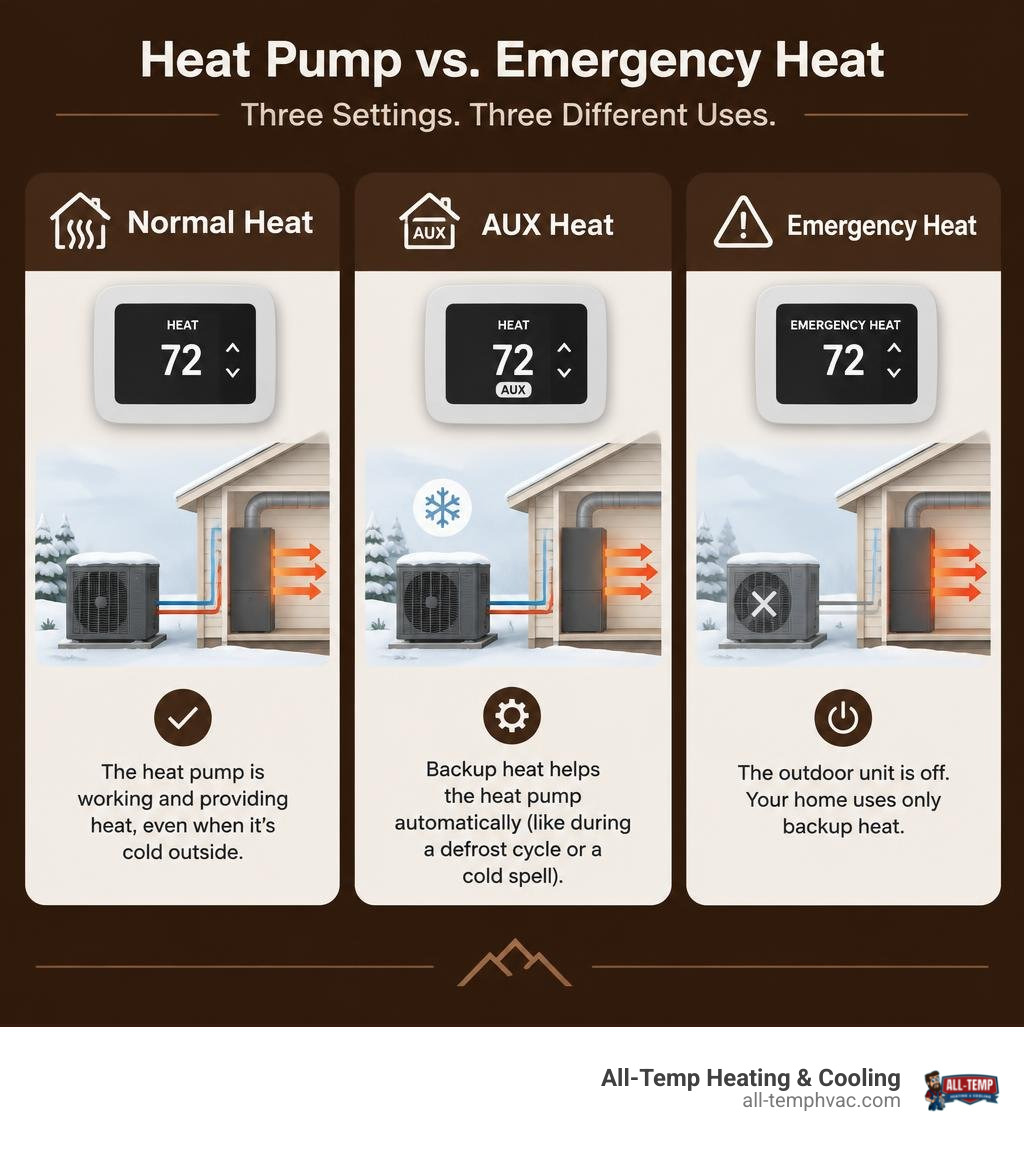
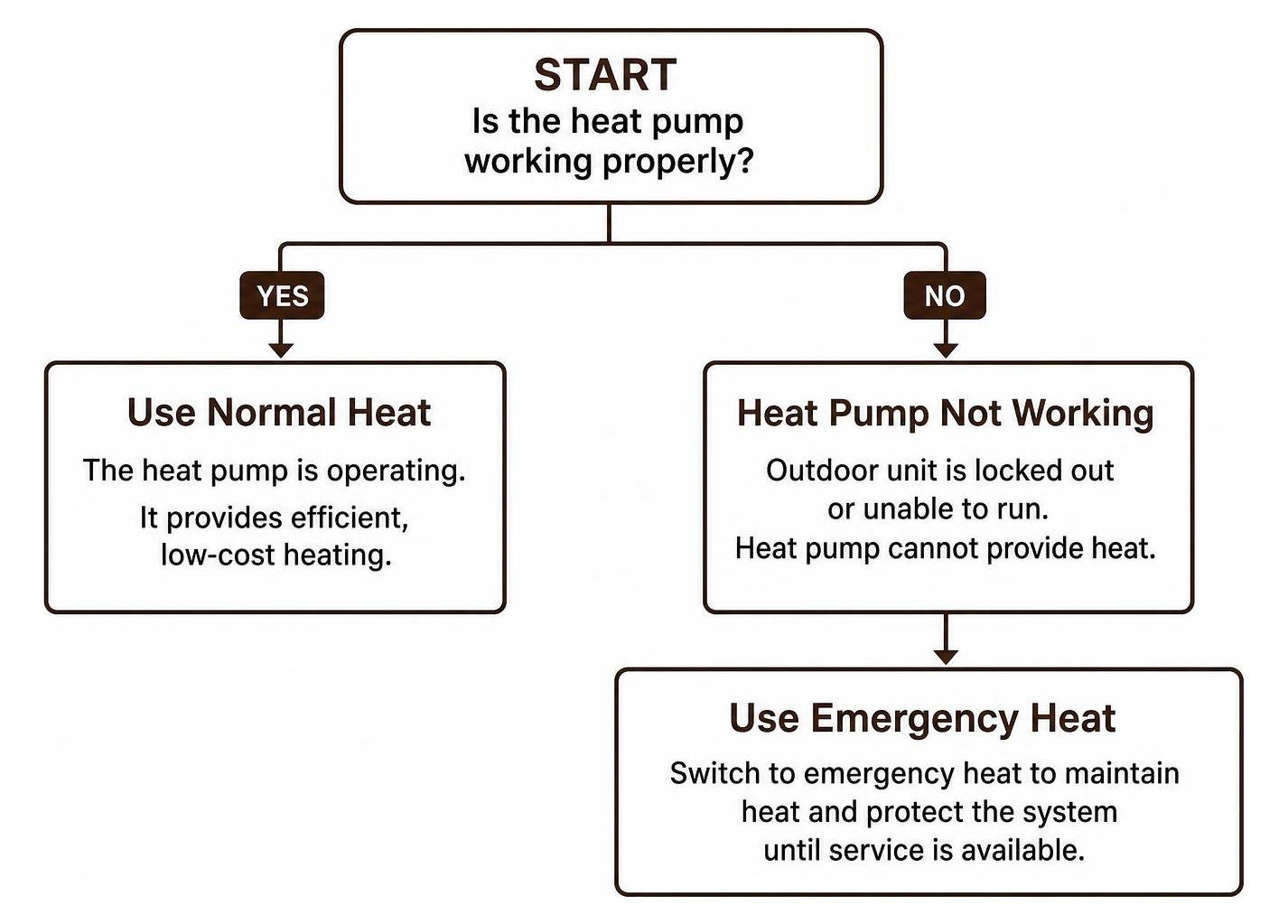
Keep your thermostat on normal Heat when the heat pump is working, even when it is cold outside. Use Emergency Heat if the outdoor unit fails, suffers damage, or cannot run safely, and call an HVAC technician. Emergency Heat shuts off the heat pump and uses only backup heat. If that backup uses electric heat strips, it usually costs more to run.
An AUX message is different. It means backup heat is helping the heat pump automatically, which can happen during a defrost cycle or a cold spell.
At All-Temp Heating & Cooling, our team has served Staunton and the Shenandoah Valley for over 15 years. We help homeowners understand heat pump vs emergency heat so they can choose the right setting when winter weather hits.
Heat Pump vs. Emergency Heat: Key Differences and Functionality
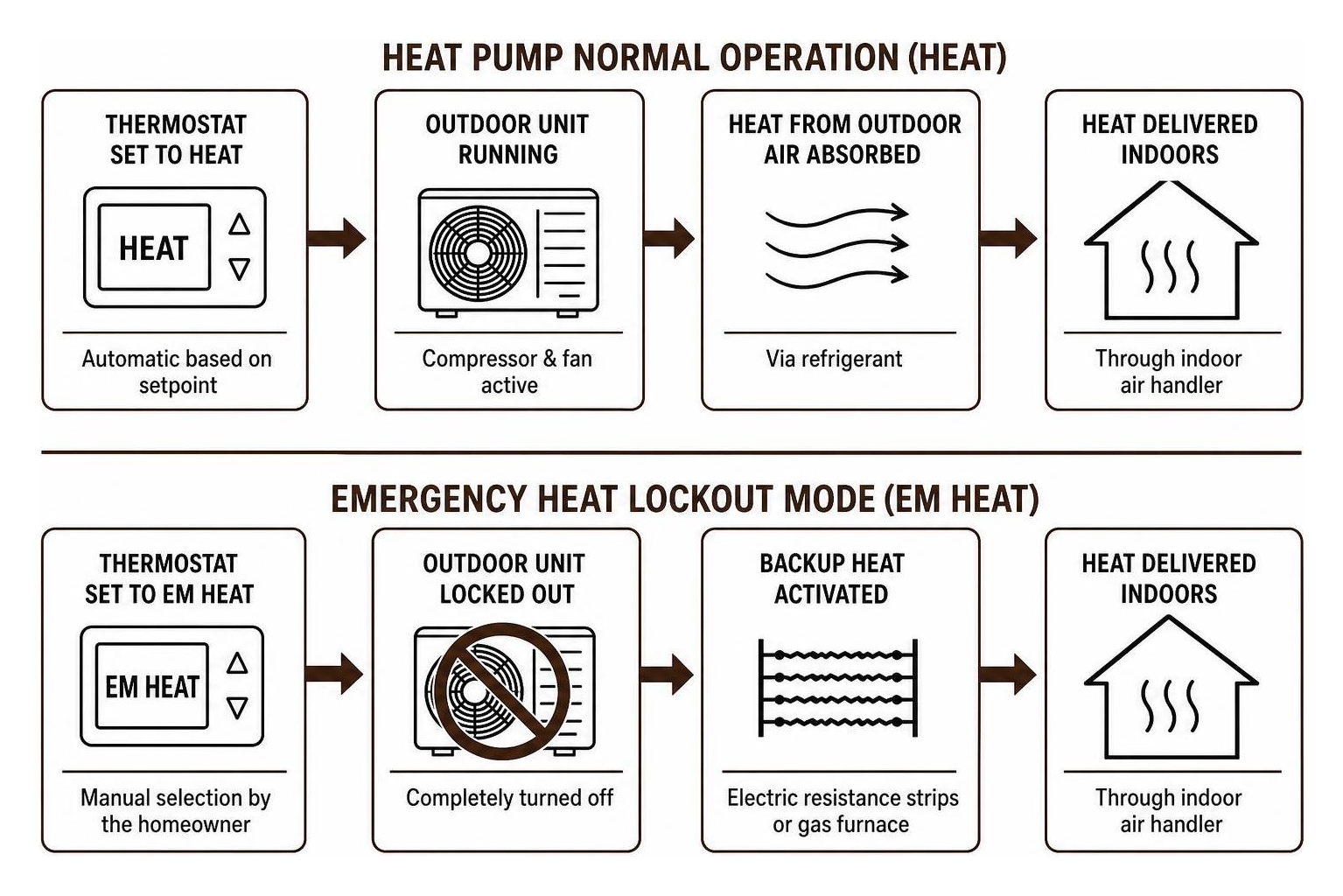
A standard heat pump does not create heat out of nothing. Instead, it absorbs heat from the outdoor air and pumps it inside your home using refrigerant and a compressor. Even when outdoor air feels cold to us, thermal energy exists within it. The system captures that heat, compresses it to raise its temperature, and distributes it through your indoor ductwork.
Emergency heat operates on a completely different principle. When you turn on emergency heat, your thermostat sends a hardware lockout signal to your outdoor unit. The heat pump turns completely off.
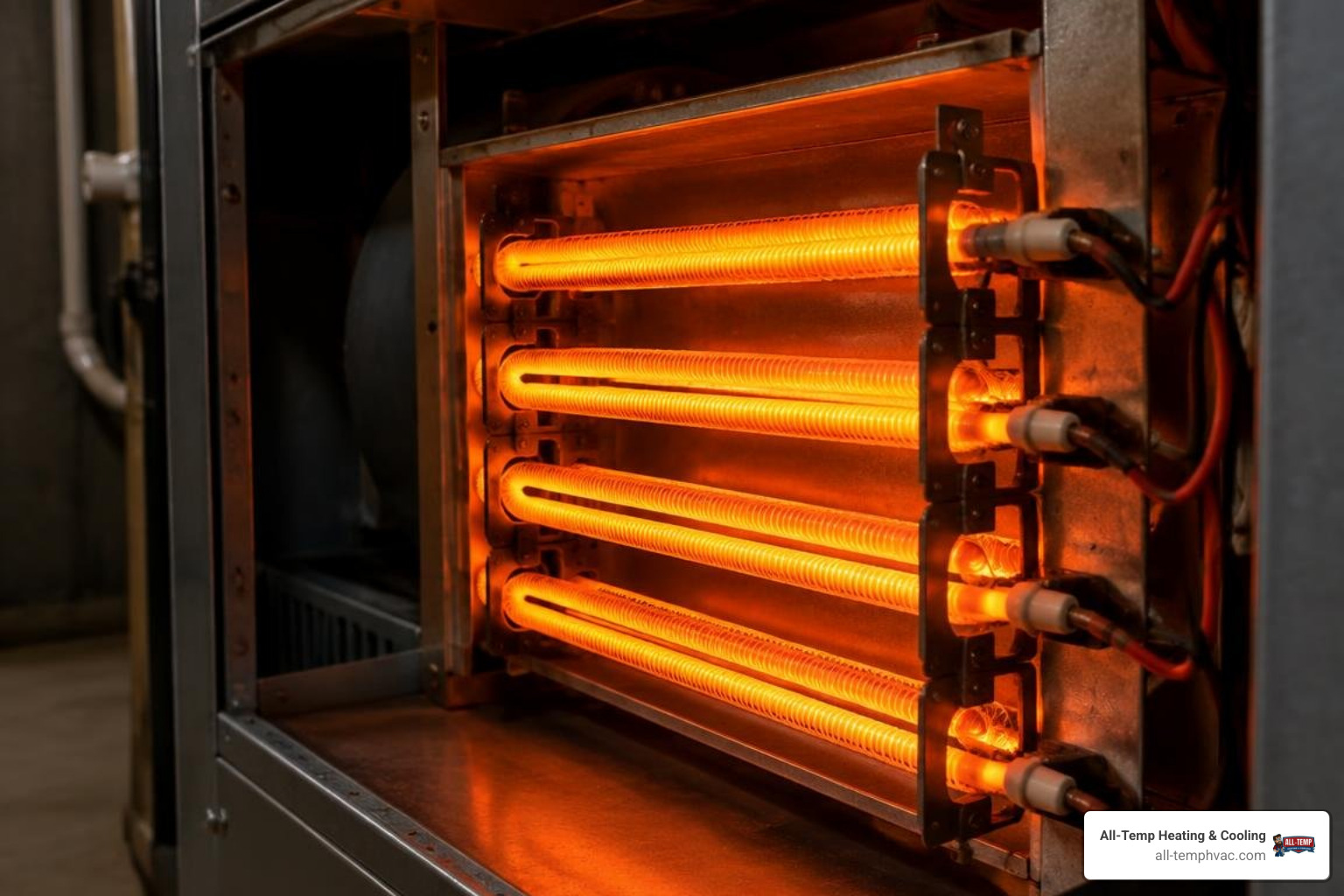
In its place, your indoor air handler activates secondary heating elements. Most commonly, these are electric resistance coils that heat up like the wires in a giant toaster. If you have a dual-fuel system, emergency heat fires up a gas or oil furnace instead.
| Feature | Heat Pump Normal Mode | Emergency Heat (EM Heat) |
|---|---|---|
| Outdoor Unit Status | Running (Compressor & Fan Active) | Completely Locked Out (Turned Off) |
| Heat Source | Ambient Outdoor Heat via Refrigerant | Electric Resistance Strips or Gas Furnace |
| Primary Activation | Automatic based on thermostat setpoint | Manual selection by the homeowner |
| Energy Efficiency | High (COP 2.0 to 4.0+) | Low (COP 1.0 for electric resistance) |
| Operating Cost | Standard, highly efficient | 2 to 3 times higher on electric systems |
| Intended Purpose | Primary day-to-day heating | Short-term bridge during equipment breakdown |
How Heat Pumps Function Compared to Auxiliary and Emergency Heat
To understand emergency heat, you also need to know about auxiliary heat. Auxiliary heat and emergency heat often use the same heating coils, but they work under different rules.
Auxiliary heat runs automatically. When outdoor temperatures drop below freezing, your heat pump might need a boost to satisfy your thermostat setting. Your system turns on the electric coils alongside the heat pump.
The heat pump continues extracting affordable warmth from outside, while the electric coils add a small boost. Normal heat pump defrost cycles also trigger auxiliary heat briefly to keep cold air from blowing through your vents while the outdoor coil clears frost.
Emergency heat is a manual setting. It never turns on by itself during standard operation. When you choose emergency heat on your thermostat, you tell the system that the heat pump is broken.
If you notice an unfamiliar emergency-heat setting on your thermostat, use it only when the outdoor heat pump cannot physically operate.
Efficiency and Operational Cost: Heat Pump vs. Emergency Heat
Heat pump efficiency is measured by the Coefficient of Performance, or COP. A typical heat pump has a COP between 2.0 and 3.5 in moderate winter conditions. That means for every single unit of electricity the system consumes, it delivers two to three and a half units of heat into your living room. It achieves this because moving existing heat takes far less energy than creating new heat.
Electric resistance emergency heat has a COP of exactly 1.0. One unit of electricity produces exactly one unit of heat. That makes emergency heat two to three times less efficient than your normal heat pump.
A standard residential heating strip draws 10 to 15 kilowatts of power every hour it runs. In contrast, a running heat pump compressor and fan might only draw 2.5 to 3 kilowatts to produce the same comfort.
Relying on emergency heat for days at a time leads directly to utility bill shock. Learning to spot the early signs you need heating repair helps you resolve small mechanical issues before your system forces you to rely on expensive backup strips. If you need professional help, our team provides dependable heating repair services throughout Staunton and the Shenandoah Valley.
When to Switch to Emergency Heat (and When to Avoid It)
Because emergency heat carries high operating costs, you must know when to switch it on and when to leave it alone. The setting exists for genuine emergencies, not as a quick boost for chilly mornings.
Knowing the correct emergency HVAC repair steps keeps your home warm safely without damaging your equipment when problems arise.
Legitimate Triggers for Emergency Heat Activation
Switch your thermostat to emergency heat under these specific conditions:
- Mechanical Lockout or Complete Failure: If the outdoor fan motor stops, the compressor fails to start, or you hear grinding noises from the outdoor unit, switch to emergency heat to protect the equipment.
- Physical Storm Damage: If falling tree limbs, heavy ice sheets, or drifting snow crush the outdoor fan grille or bend the aluminum coil fins, lock out the outdoor unit.
- Solid Ice Encasement: While light frost is normal, thick sheets of solid ice encasing the entire outdoor unit indicate a failure in the defrost controls. If your heat pump is not heating, turn on emergency heat to keep your pipes safe while you wait for service.
- Repeated Breaker Trips: If the outdoor unit trips your main electrical breaker every time it tries to start, leave that breaker off, switch the thermostat to emergency heat, and call a professional.
Why Routine Cold Weather Is Not an Emergency
Many homeowners switch to emergency heat whenever outdoor temperatures drop below freezing. This is an expensive mistake.
Modern heat pumps extract heat from the air even when temperatures fall into the teens or single digits. When the outdoor temperature drops below your home’s thermal balance point, your thermostat automatically brings on auxiliary heat to help. The heat pump still provides the base heat cheaply, and the backup heat fills the gap.
Switching manually to emergency heat cuts off the heat pump entirely. You force your home to heat itself using 100 percent resistance heat, throwing away all the efficiency your heat pump offers. Let your thermostat manage the staging automatically during cold snaps in Albemarle County, Augusta County, or Rockingham County.
Technical, Environmental, and Regional Heating Considerations
Selecting the best heating balance requires understanding local climate demands, electrical capacity, and equipment setup. Routine HVAC maintenance plans can also help keep those parts working safely.
Our regional climate brings variable winter conditions across Staunton, Waynesboro, Harrisonburg, Charlottesville, Lexington, and surrounding mountain areas like Wintergreen Resort. Evaluating heat pump vs furnace options allows homeowners to balance upfront equipment costs with winter energy bills.
Environmental Impact and Safety: Heat Pump vs. Emergency Heat
Heat pumps support regional energy conservation by pulling free thermal energy from the atmosphere. When millions of homes run heat pumps, electrical grid demand stays balanced.
When thousands of homes switch simultaneously to emergency heat during a deep freeze, grid demand spikes dramatically. Resistance heating draws maximum amperage continuously. This massive draw stresses local power infrastructure and increases carbon emissions at power generation plants.
Emergency heat also places a heavy continuous load on your home electrical panel. Electric strip packages require dedicated 30 to 60-amp breakers. Running those elements for extended periods increases the risk of thermal wear on older wiring and loose terminals.
Using emergency heat is much safer than placing portable space heaters throughout your home, but your system should return to normal heat pump operation as quickly as possible.
Best Practices for Dual-Fuel and Backup Heat Integration
Dual-fuel systems combine an electric heat pump with a high-efficiency gas or propane furnace. In places like Crozet, Fishersville, and Buena Vista, dual-fuel setups provide dependable comfort.
During mild winter days, the heat pump delivers clean, efficient warmth. When temperatures drop below a programmed economic balance point, the thermostat turns off the heat pump and fires the gas furnace. This transition happens automatically without manual emergency heat activation.
To protect your system, follow these proven heating practices:
- Maintain Three Feet of Clearance: Clear autumn leaves, tall grass, and winter snow drifts away from the outdoor unit to promote proper airflow.
- Avoid Large Thermostat Setbacks: Avoid dropping your thermostat setting by more than two or three degrees at night. Raising the temperature five degrees in the morning forces the system to activate auxiliary heat strips needlessly.
- Check Air Filters Monthly: Restricted airflow across the indoor coil causes backup heat strips to overheat and trip their high-limit safety switches.
Protecting Your Home Comfort and Energy Efficiency This Winter
When winter temperatures drop across the Shenandoah Valley and central Virginia, you need heating equipment you can rely on every single day. Whether you live in Bridgewater, Stuarts Draft, Verona, Grottoes, Dayton, Weyers Cave, Crimora, Massanutten, Massanetta Springs, Roseland, Raphine, or Rockbridge County, our team is here to protect your comfort.
At All-Temp Heating & Cooling, our team delivers dependable heating solutions backed by our two-year labor warranty. If your outdoor unit struggles with ice accumulation, strange noises, or frequent auxiliary heat cycles, we can diagnose the issue quickly. When your equipment reaches the end of its lifespan, we provide professional heat pump replacement services designed to keep your home warm and your utility bills low all winter long.
If your system struggles to keep up, contact our professional heating repair technicians before the next freeze so our team can restore safe, efficient heat.
Frequently Asked Questions About Heat Pump Emergency Heat
Does emergency heat turn off automatically once the house warms up?
No. The heating elements cycle on and off to maintain your thermostat setpoint, but the system will never leave emergency heat mode on its own.
Emergency heat is a manual hardware override. The outdoor compressor remains locked out until you walk to the thermostat and manually switch the system back to normal Heat mode. If you forget to reset it, your system will continue running expensive backup heat indefinitely.
Can you safely run emergency heat for multiple days?
Yes, modern heating systems can safely run emergency heat for several days while you await replacement parts or technician service.
The indoor air handler includes built-in thermal limit switches to prevent overheating. However, you should treat emergency heat strictly as a temporary bridge. Running resistance heat for days will cause your electric bill to increase substantially.
At what outdoor temperature should I manually switch to emergency heat?
You should never switch to emergency heat based solely on the outdoor temperature.
Your thermostat already handles extreme temperatures automatically by staging auxiliary heat alongside your heat pump. Only switch your system to emergency heat if the outdoor heat pump is physically damaged, covered in solid ice, or failing to run.