

Why What Best HVAC Maintenance Schedule You Follow Determines How Long Your System Lasts
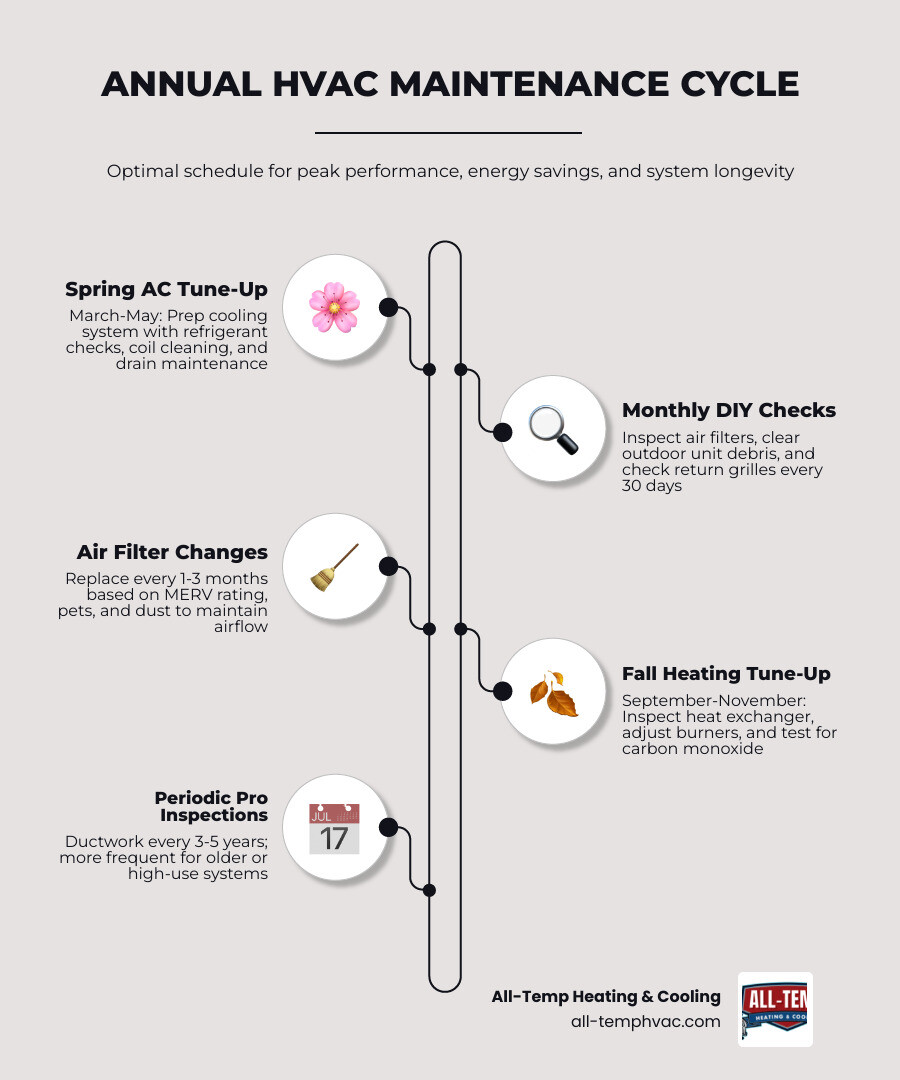
What best HVAC maintenance schedule looks like for most homes and small businesses comes down to this:
| Task | Frequency |
|---|---|
| Professional AC tune-up | Once per spring (March-May) |
| Professional heating tune-up | Once per fall (September-November) |
| Air filter inspection | Monthly |
| Air filter replacement | Every 1-3 months |
| Outdoor unit debris check | Monthly |
| Condensate drain check | Monthly |
| Ductwork inspection | Every 3-5 years |
Most HVAC experts agree: twice a year is the sweet spot for professional service. Once before cooling season, once before heating season.
Miss those windows, and you risk breakdowns at the worst possible time, higher energy bills, and a shorter system lifespan. In fact, annual maintenance can prevent 70-80% of HVAC breakdowns and save homeowners $100-300 per year in energy costs.
Think of it like your car. Skip the oil changes long enough and you are not just paying for an oil change anymore.
Here in Staunton and across the Shenandoah Valley, summers get hot and winters get cold. Your system does not get a break, and neither should your maintenance routine.
Finding the best HVAC maintenance schedule is not just about remembering to book service. It is about timing. For Virginia homeowners and businesses, the right schedule helps your system run more efficiently, last longer, and avoid surprise breakdowns. The sections below explain when to schedule service, what a professional visit should include, and which simple tasks you can handle yourself between appointments.
The Gold Standard: What Best HVAC Maintenance Schedule Looks Like
When we talk about the gold standard for your heating and cooling system, we are looking at a proactive approach. A reactive approach means calling us when the house is 85 degrees inside. A proactive approach means we found a failing capacitor in April so that never happens.
Beyond just comfort, this schedule protects your wallet. Proper preventative maintenance can save between 5% and 20% on your monthly energy bills. It also keeps you in the good graces of your manufacturer. Most HVAC brands require documented professional maintenance to keep your warranty valid. If a major part like a compressor fails and you have no service records, you might be stuck paying the full bill.
Why Twice a Year is the Best HVAC Maintenance Schedule
We recommend twice-yearly visits because your system uses different components depending on the season. In the spring, we focus on the refrigeration cycle, the outdoor condenser, and the evaporator coil. In the fall, the focus shifts to the heat exchanger, burners, and safety sensors.
Following this HVAC system needs tune-ups philosophy ensures peak performance. When a system is clean and lubricated, it experiences less friction. Less friction means it uses less electricity to do the same amount of work. It also extends the life of the equipment. A well-maintained system can last 15 to 20 years, whereas a neglected one might fail closer to the 10-year mark.
Timing Your Spring and Fall Appointments
In the Shenandoah Valley, timing is vital. We suggest scheduling your spring cooling service between March and May. You want this done before the first true heatwave hits in June. For your heating system, aim for September through November.
Scheduling during these off-peak windows is a smart move. Once the temperature swings wildly, our phones ring off the hook with emergency repairs. By booking early, you get your choice of appointment times and ensure our technicians can take their time with a thorough inspection. Whether you are in Harrisonburg or Waynesboro, getting ahead of the weather is the best way to ensure uninterrupted comfort.
Seasonal Breakdown: Professional Spring and Fall Tune-Ups
Professional maintenance goes far deeper than what most homeowners can do themselves. While a homeowner might change a filter, our team uses specialized tools to measure electrical draw, refrigerant pressure, and airflow.
Specific Checks for Spring Cooling
During a spring visit, we prepare your air conditioner for the humidity. We start by cleaning the evaporator and condenser coils. Dirty coils make the system run longer to reach your desired temperature, which spikes your bill and wears out the motor.
We also perform a what happens during an AC tune-up appointment deep dive. This includes:
- Checking refrigerant levels to ensure there are no leaks.
- Inspecting the condensate drain line for clogs that could cause water damage.
- Tightening electrical connections to prevent shorts or fire hazards.
- Calibrating the thermostat so your home actually stays at the temperature you set.
Essential Tasks for Fall Heating
The importance of fall HVAC maintenance cannot be overstated because it involves safety. If you have a gas furnace, we must inspect the heat exchanger for cracks. A cracked heat exchanger can leak carbon monoxide into your home.
Our fall checklist includes:
- Adjusting burners for a clean, efficient flame.
- Testing safety controls and limit switches.
- Inspecting the flue pipe for blockages or rust.
- Lubricating moving parts like the blower motor to reduce wear.
For those with heat pumps, we test the reversing valve to make sure the system can actually switch from cooling to heating mode.
Homeowner Tasks: Monthly and Quarterly DIY Maintenance
Professional visits are the foundation, but what you do in between matters just as much. You do not need to be a mechanic to keep your system happy. A few simple tasks can prevent the majority of service calls we receive.
Air Filter Frequency in the Best HVAC Maintenance Schedule
The single most important DIY task is changing your air filter. This is the lungs of your HVAC system. When the filter is clogged, the blower motor has to work twice as hard to pull air through it. This can reduce your system’s efficiency by up to 15%.
For the best HVAC maintenance schedule, check your filter every 30 days. If you have pets that shed or a dusty environment, you will likely need to replace it every month. If your home is relatively quiet and clean, you might get away with every 90 days. Always use a filter with the MERV rating recommended by your manufacturer. Using a filter that is too “thick” for your system can actually restrict airflow and cause the coil to freeze.
Monthly DIY Checklist for Virginia Homes
Beyond the filter, keep an eye on your equipment:
- Clear the outdoor unit: Ensure there are at least two feet of clearance around your outdoor condenser. Trim back bushes, remove tall weeds, and clear away fallen leaves.
- Inspect return grilles: Make sure your indoor return vents are not blocked by furniture or curtains.
- Listen and smell: Take a moment once a month to listen for new rattles or squeals. Check for any “dusty” or “burning” smells when the system kicks on.
- Visual check: Look for any pools of water near your indoor unit, which could indicate a clogged drain line.
Factors That Influence Your Service Frequency
Not every home in Augusta County is the same. While the biannual rule is a great baseline, several factors might mean you need more frequent attention.
Maintaining Older Systems and High-Usage Units
Once your system hits the ten-year mark, it enters its “senior years.” Parts begin to wear down, and efficiency naturally starts to dip. For older systems, we often recommend moving to a quarterly inspection. This allows us to catch small issues before they turn into a reason to replace the entire unit.
High-usage environments also need more love. If you work from home or have a large family with the doors opening and closing constantly, your system is running more hours per day than average. This increased wear and tear means your HVAC system lifespan maintenance tips should focus on more frequent lubrication and electrical testing.
Regional Considerations for Augusta County
In Virginia, our weather is a major factor. Our high humidity in the summer puts a massive load on your AC’s ability to dehumidify. This means your condensate drains are working overtime and are more prone to algae clogs.
We also deal with high pollen counts in the spring and dust during dry spells. These particulates clog coils faster than in other climates. If you live in a particularly wooded area like Wintergreen or a dusty area near construction, you should definitely stick to the monthly filter check. Finally, winter freezes can be tough on heat pumps. Ensuring your outdoor unit is clear of snow and ice is a vital winter task for any Virginia homeowner.
Residential vs. Commercial Maintenance Needs
Commercial HVAC systems are different beasts. While a residential unit might keep a family of four comfortable, a commercial unit might be responsible for a retail space with 50 people or a kitchen with high-heat appliances.
| Feature | Residential | Commercial |
|---|---|---|
| System Type | Split systems, furnaces | Rooftop units (RTUs), chillers |
| Usage | Intermittent | Often 24/7 |
| Maintenance Cycle | Biannual | Quarterly or Monthly |
| Complexity | Single zone | Multi-zone, complex ducting |
| Filters | 1-inch to 4-inch pleated | High-capacity media, bags |
Commercial HVAC Demands and Quarterly Cycles
For small businesses in Staunton or Harrisonburg, we usually recommend a quarterly maintenance cycle. Commercial units, especially rooftop units, are exposed to the elements 24/7 and often run constantly to maintain air quality standards.
Quarterly visits allow us to check belt tension, lubricate larger bearings, and ensure that economizers are working correctly. In a commercial setting, air quality is not just about comfort; it is about the health and productivity of your employees and tenants.
Why Businesses Require More Frequent Oversight
Businesses face higher energy costs and stricter regulations. An inefficient HVAC system can account for up to 35% of a commercial building’s total energy use. Frequent oversight ensures you are not throwing money out the window.
Furthermore, commercial systems have more complex ductwork and drainage systems. A leak in a commercial building can cause thousands of dollars in damage to inventory or equipment. By following a strict HVAC preventive maintenance schedule, business owners can budget for maintenance rather than being surprised by a massive repair bill.
Frequently Asked Questions About HVAC Timing
What are the signs I need immediate service before my scheduled visit?
Even with the best schedule, things can go wrong. You should call us immediately if you notice:
- Unusual noises: Grinding, squealing, or loud banging sounds.
- Rising bills: A sudden, unexplained jump in your electric or gas bill.
- Weak airflow: Air is coming out of the vents, but it is not very strong.
- Foul odors: A “sock” smell (mold) or a sharp electrical burning smell.
- Inconsistent temperatures: One room is freezing while another is sweltering.
Should I enroll in a maintenance agreement?
Yes, and not just because we offer them. An HVAC Maintenance Plan provides peace of mind. Our members get priority service, which is a lifesaver when the temperature hits 95 degrees and everyone’s AC is breaking. You also typically get discounts on repairs and a documented history of service that adds value to your home if you ever decide to sell.
How long does a typical maintenance visit take?
A thorough professional visit usually takes between one and two hours. This gives the technician enough time to clean the coils, test all electrical components, check refrigerant levels, and run the system through a full cycle to ensure everything is operating safely. If a company claims to do a “tune-up” in 20 minutes, they are likely skipping important safety and efficiency checks.
Conclusion
Finding what best HVAC maintenance schedule fits your life does not have to be complicated. By sticking to the biannual professional routine and handling your monthly filter changes, you are doing more for your home’s comfort than 90% of homeowners.
At All-Temp Heating & Cooling, we take pride in providing honest, reliable service to our neighbors in Staunton, Harrisonburg, and throughout Augusta County. We stand behind our work with a two-year labor warranty and use the latest technology to keep your system running at peak efficiency.
Whether you need a quick maintenance check or a full system evaluation, our team is here to help. Don’t wait for the next heatwave or cold snap to find out if your system is ready. Contact our HVAC maintenance specialists today and let’s get your HVAC routine on track.