
How Much Air Are You Losing Right Now? The Case for HVAC Duct Sealing
HVAC duct sealing is the process of closing gaps, holes, and loose connections in your home’s ductwork to stop conditioned air from escaping before it reaches your living spaces.
Quick answers:
- What it fixes: Air loss through leaky ducts, uneven temperatures, high energy bills, and poor indoor air quality
- How it works: Mastic sealant, foil tape, or injected aerosol sealant is applied to gaps and joints in your duct system
- Who does it: Homeowners can tackle accessible ducts DIY; a licensed HVAC tech handles hard-to-reach areas or full system sealing
- What it costs: DIY materials run around $50; professional sealing typically ranges from $1,000 to $2,500
- Why it matters: The Department of Energy estimates that 20–30% of the air moving through a typical duct system is lost to leaks — meaning your HVAC is working harder than it needs to
That lost air isn’t just uncomfortable. It’s money leaving your home every single month through cracks you probably can’t see.
If your energy bills keep climbing, some rooms never seem to hit the right temperature, or your home feels stuffy no matter how you set the thermostat, leaky ducts are often the hidden culprit.
This guide walks you through everything you need to know: how to spot the signs, which materials actually work, when to DIY, and when to call a professional.
At All-Temp Heating & Cooling, we’ve seen how HVAC duct sealing can be one of the most effective – and most overlooked – ways to improve comfort and cut energy waste in homes across the Shenandoah Valley. If your vents seem to be “ghosting” certain rooms, this guide will walk you through what’s happening inside your ductwork and what you can do about it.
Why HVAC Duct Sealing is Essential for Your Home
When we talk about home comfort in Virginia, we often focus on the furnace or the air conditioner. But your ductwork is the delivery highway for that comfort. If the highway has potholes and exit ramps that lead to nowhere (like your attic or crawlspace), the “passengers”—your warm or cool air—never arrive at their destination.
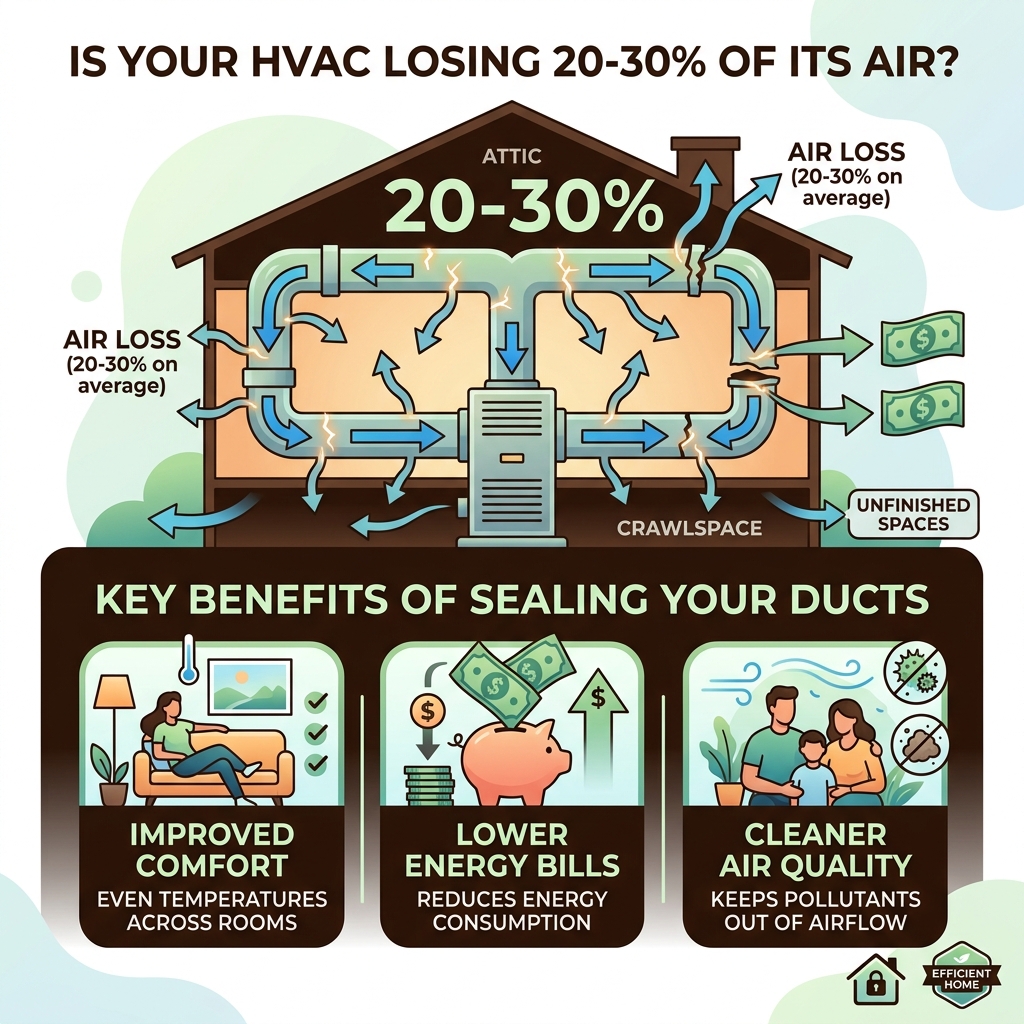
The Importance of Duct Sealing cannot be overstated. According to Duct Sealing | ENERGY STAR, about 20% to 30% of the air moving through the duct system in a typical house is lost due to leaks, holes, and poorly connected ducts. This is essentially air you have already paid to heat or cool, escaping into areas of the home where you don’t even live.
Sealing duct leaks can make a real difference in your monthly energy costs. When conditioned air actually reaches the rooms it is supposed to, your HVAC system does not have to run as long to keep your home comfortable. That lighter workload can also reduce strain on major components like the blower motor and compressor, which may help your system last longer. There is an environmental upside, too: less wasted energy means a smaller carbon footprint. The benefits of duct sealing go beyond savings and support healthier, more efficient airflow throughout your home.
Improving Indoor Air Quality Through HVAC Duct Sealing
Many homeowners are surprised to learn that leaky ducts don’t just let air out; they also pull air in. This is known as the “venturi effect.” When air rushes past a hole in the ductwork, it creates a vacuum that sucks in whatever is surrounding the duct. If your ducts are in a dusty attic or a damp crawlspace, they are pulling in dust, insulation fibers, rodent droppings, and mold spores.
Understanding what is duct sealing and what are the signs your Staunton, VA home may need it is the first step toward a healthier home.
The Role of Duct Insulation and Moisture Control
In the humid Virginia summers, “sweating” ducts are a common problem. When cold air moves through a metal duct located in a hot, humid attic, condensation forms on the outside of the duct—much like a glass of ice water on a porch. This moisture can lead to mold growth and can eventually rot out your drywall or ceiling.
How does duct sealing work to prevent this? By creating an airtight seal and using proper vapor barriers, duct sealing helps keep warm, humid air from touching cold duct surfaces. In unconditioned spaces like attics or crawlspaces, it is often paired with quality insulation. That helps control temperature differences and makes sure the air reaching your vents is much closer to the temperature set on your thermostat.
Identifying the Signs of Leaky Ductwork
How do you know if your home is a candidate for hvac duct sealing? While some leaks are obvious, others require a bit of detective work.
Common indicators include:
- Uneven Temperatures: You have “that one room” that is always five degrees warmer or cooler than the rest of the house.
- High Energy Bills: Your utility costs are significantly higher than your neighbors’ with similar-sized homes, or they have spiked without a change in weather.
- Stuffy Rooms: Rooms feel “dead” or lack airflow, even when the system is running.
- Whistling Noises: A high-pitched whistling or whooshing sound often indicates air being forced through a small crack or loose joint.
- Excessive Dust: You find yourself dusting your furniture every two days, despite having a high-quality air filter.
- Visual Indicators: If you can access your attic or basement, look for “insulation staining.” This is where the insulation around a duct looks grey or black; it’s acting as a filter for air leaking out of the duct.
The Best Materials and Methods for Sealing HVAC Ducts
If you are planning to tackle some sealing yourself, the materials you choose are the difference between a permanent fix and a waste of time.
One of the most common mistakes we see is the use of “duct tape.” Ironically, standard silver cloth duct tape is the worst thing you can use for hvac duct sealing. The adhesive dries out and fails under the constant temperature changes of an HVAC system. Instead, you must use materials rated UL-181.
When sealing air ducts, you will generally choose between two primary materials:
| Material | Best For | Pros | Cons |
|---|---|---|---|
| Mastic Sealant | Large gaps and permanent joints | Extremely durable, lasts 20+ years, fills large gaps | Messy to apply, requires a brush |
| Foil Tape (UL-181) | Small cracks and flat seams | Clean application, immediate bond | Doesn’t work well on dirty/oily surfaces |
| Duct Tape | Temporary fixes (not HVAC) | Cheap | Fails quickly, not code-compliant |
We recommend water-based mastic sealants with fiber reinforcement for most joints. It has the consistency of thick peanut butter and dries into a flexible, rubbery seal that moves with your home.
Advanced Solutions: Injected Spray Sealant for HVAC Duct Sealing
For leaks hidden behind walls or under floors, manual sealing often is not possible. This is where newer technology helps. We can fix leaky air ducts with Aeroseal, an injected spray sealant.
This process involves sealing off all your registers and injecting a pressurized mist of aerosolized acrylic particles into the system. These particles stay suspended in the air until they reach a leak. As the air escapes through the crack, the particles collide with the edges of the hole and stick, gradually building up a seal.
This computer-controlled sealing process provides a “before and after” report, showing exactly how much the leakage was reduced. It is incredibly effective for older homes in Charlottesville or Fishersville where the ductwork is largely inaccessible.
Professional Testing and Building Code Compliance
When we perform professional hvac duct sealing, we don’t just guess where the leaks are. We use diagnostic tools like:
- Duct Blasters: A specialized fan and pressure gauge system that measures exactly how “leaky” your system is in Cubic Feet per Minute (CFM).
- Smoke Pencils: These emit a harmless chemical smoke that allows us to visually track air currents and pinpoint tiny leaks.
- Infrared Cameras: These help us see temperature differences in walls where air might be escaping.
Proper sealing is also a matter of safety and compliance. The International Energy Conservation Code (IECC) has strict standards for duct leakage in new constructions. Furthermore, when you seal a home tightly, you must ensure “combustion safety.” If a home is too tight, gas-burning appliances like water heaters might not vent properly. We always perform a draft test to ensure your family is safe from carbon monoxide.
DIY vs. Professional Duct Sealing: Process and Costs
Can you seal your own ducts? If your ductwork is exposed in an unfinished basement or attic, absolutely.
The DIY Process:
- Surface Preparation: Wipe the ducts down with a damp rag. Sealants won’t stick to 20 years of attic dust.
- Cleaning: For oily residues, use a mild degreaser.
- Application: Use a disposable paintbrush to apply mastic at least as thick as a nickel over every seam.
- Reinforcement: For gaps wider than 1/4 inch, use fiberglass mesh tape embedded in the mastic.
Professional sealing often pays for itself faster because it reaches 100% of the system, not just the 30% you can see.
Cost Comparison:
- DIY: $50–$100 for mastic, tape, and brushes.
- Professional: $1,000–$2,500 depending on the size of the home and the method (manual vs. aerosol).
While the professional cost is higher, the ROI analysis is compelling. If you are wasting $40 a month on leaked air, a professional seal pays for itself in just a few years and continues to save you money for the life of the system.
Safety Note: Always wear a dust mask, gloves, and eye protection when working in attics or crawlspaces. Watch out for sharp metal edges and “low clearance” beams!
Frequently Asked Questions about Duct Sealing
How much does professional duct sealing cost?
As mentioned, most homeowners in the Staunton and Waynesboro areas can expect to pay between $1,000 and $2,500. The variables include the number of registers, the accessibility of the ductwork (crawlspaces take longer than basements), and whether we are using manual mastic or aerosol technology.
Can duct sealing improve my home’s airflow?
Yes! By closing the “potholes” in your ducts, we increase the static pressure. This means the air comes out of your registers with more velocity, which helps mix the air in the room better and eliminates those “stuffy” corners. It also reduces the strain on your blower motor, as it doesn’t have to work against a “leaky” system.
What are the most common duct sealing mistakes?
The “Big Four” mistakes we see are:
- Using the wrong tape: Standard duct tape will fail within a year.
- Skipping the cleaning: Sealant applied to dust will just peel off.
- Ignoring the plenum: The plenum is the large box connected directly to your furnace or AC. Because the pressure is highest here, a small leak at the plenum loses more air than a large leak at the end of the line.
- Overlooking disconnected joints: Sometimes a duct hasn’t just leaked; it has completely fallen off. Sealing small cracks while a whole branch is disconnected won’t help much!
Conclusion
At All-Temp Heating & Cooling, we believe every home in the Shenandoah Valley should be a sanctuary of comfort and efficiency. Whether you are in Staunton, Harrisonburg, or Charlottesville, your HVAC system is one of your home’s biggest investments. Protecting that investment starts with ensuring the air actually gets where it’s supposed to go.
We focus on honest service and proven technology, including aerosol sealing and duct blasting, to deliver measurable results. If you are tired of high bills and cold rooms, it may be time to consider professional duct sealing. Our two-year labor warranty adds peace of mind and helps protect your home’s efficiency for years to come.
Ready to stop throwing money into your attic? Contact our air duct specialists or visit our website to schedule a duct inspection. Let’s make your home the most comfortable place it can be.