
Why Most Homes Are Losing Money Through Their Ductwork Right Now
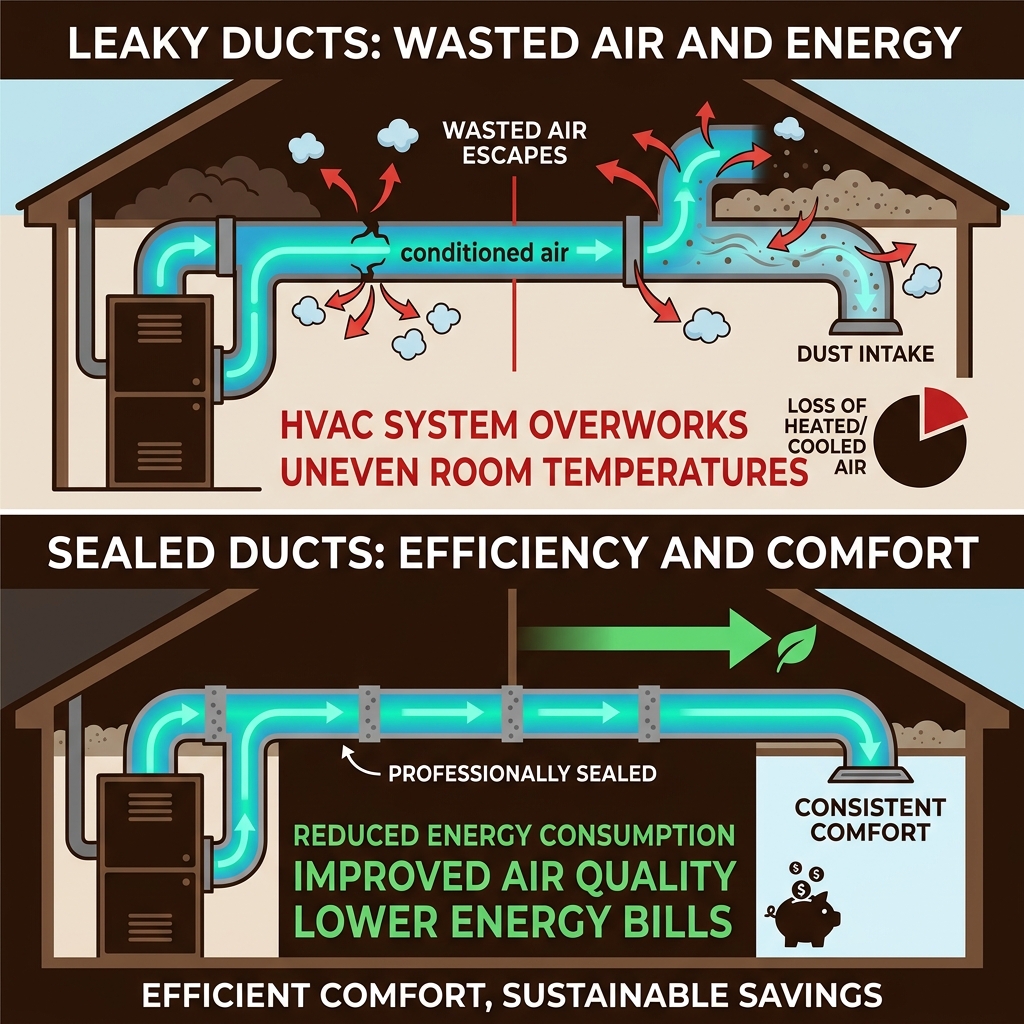
HVAC air duct sealing is the process of closing leaks, gaps, and cracks in your home’s duct system to stop conditioned air from escaping before it reaches your living spaces.
Here’s what you need to know quickly:
- The average home loses 20–30% of heated or cooled air through leaky ducts
- Typical duct systems waste 25–40% of your HVAC energy output
- Sealing can cut energy bills by up to 30%
- Advanced methods like Aeroseal can reduce duct leakage by 90–95%
Most homeowners never think about their ductwork — until their energy bill spikes, one room won’t stay warm, or dust keeps building up no matter how often they clean. The U.S. Department of Energy has called duct repairs “the most important energy improvement measure you can do” in a home. That’s not an exaggeration.
Three out of four homes have unintended air leaking in or out of their ductwork. That means your heating and cooling system is working harder than it needs to — and you’re paying for every wasted dollar of it.
I’m DJ Meadows, President of All-Temp Heating & Cooling, and after 15+ years serving homeowners across the Shenandoah Valley, HVAC air duct sealing is one of the most impactful upgrades I’ve seen families make. In this guide, I’ll walk you through everything you need to know to make a smart decision for your home.
Why HVAC Air Duct Sealing is Essential for Your Home
When we talk about home comfort, we usually focus on the furnace or the air conditioner. But those units are just the “engines.” Your ductwork is the “delivery truck” that carries the comfort to your rooms. If that truck has holes in the floor, half the cargo is gone before it arrives.
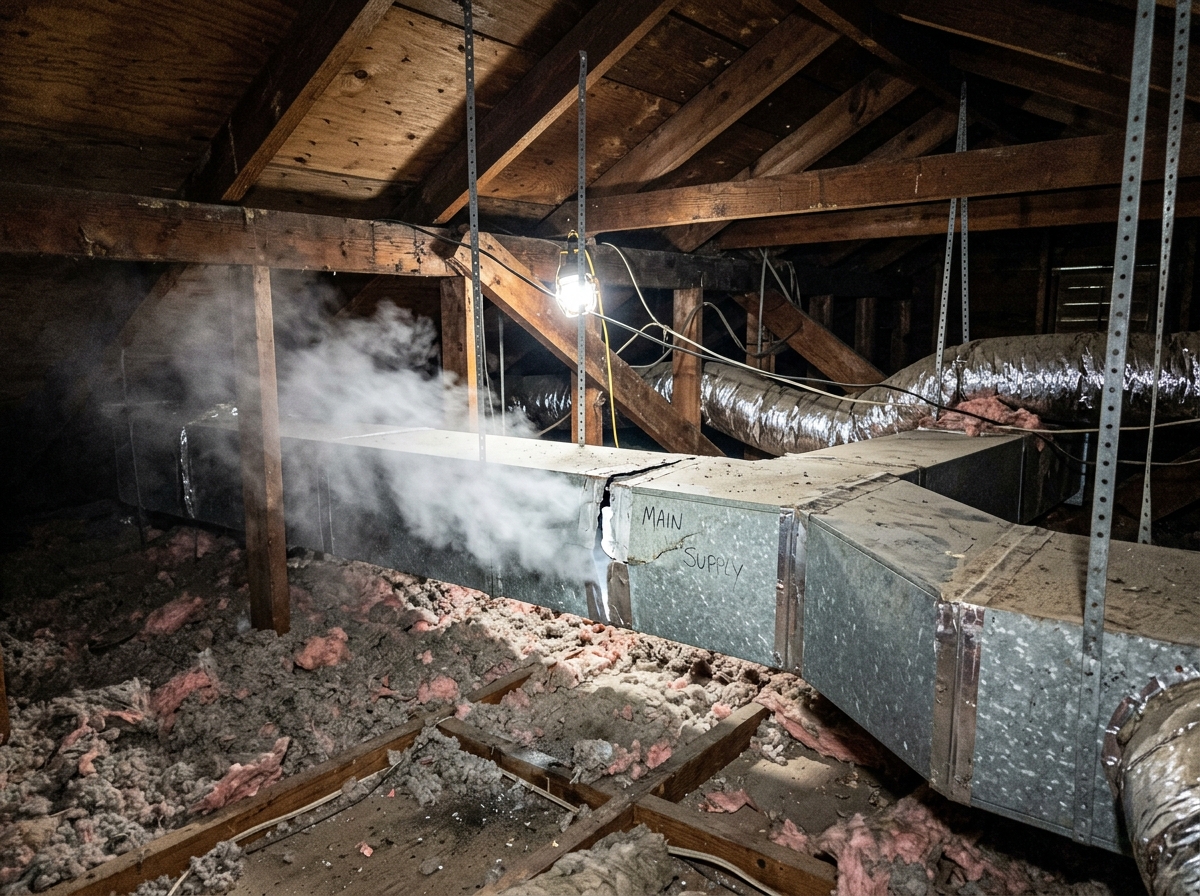
According to ENERGY STAR, about 20 to 30 percent of the air moving through a typical duct system is lost due to leaks, holes, and poorly connected joints. This isn’t just a minor efficiency dip; it’s a major drain on your finances and your equipment.
The importance of duct sealing cannot be overstated for several reasons:
- Energy Efficiency: When air leaks out, your HVAC system has to run longer to reach the temperature set on your thermostat. This results in typical duct systems losing 25 to 40 percent of the heating or cooling energy put out by your central unit.
- System Longevity: An overworked system is a system that breaks down sooner. By sealing leaks, you reduce the mechanical strain on your blower motor and compressor, potentially adding years to your equipment’s lifespan.
- Environmental Impact: Using less energy means a smaller carbon footprint. It’s one of the greenest upgrades you can make because it focuses on conservation rather than just generation.
Performance Comparison: Sealed vs. Unsealed Ducts
| Feature | Unsealed Ductwork | Professionally Sealed Ductwork |
|---|---|---|
| Air Loss | 20% – 40% loss | Less than 5% loss |
| Energy Bills | 30% higher on average | Optimized and lower |
| Air Quality | Pulls in attic/crawlspace dust | Keeps pollutants out |
| Comfort | Hot and cold spots | Consistent temperatures |
| Equipment Strain | High (constant cycling) | Low (efficient cycles) |
Common Signs Your Ductwork Needs Professional Attention
How do you know if your home in Staunton or Harrisonburg is suffering from leaky ducts? Since most of your ductwork is hidden behind walls, under floors, or in the attic, you have to look for the “symptoms.”
If you’re not sure whether your ductwork needs attention, begin with these red flags:
- High Utility Bills: If your energy costs are rising but your habits haven’t changed, your HVAC system is likely fighting a losing battle against leaks.
- Uneven Temperatures: Do you have that “one room” that is always five degrees colder in the winter or stuffy in the summer? This is often caused by a disconnected or leaky supply duct that can’t deliver enough air to that specific space.
- Excessive Dust: Leaky return ducts act like a vacuum, pulling in fine particles from your attic or crawlspace and blasting them through your vents. If you feel like you’re dusting every other day, your ducts might be the culprit.
- Whistling or Rattling Noises: High-pressure air escaping through a small crack often creates a distinct whistling sound.
- Tangled or Kinked Flex Ducts: If you can see your ducts in an unfinished basement or attic and they look like a bowl of spaghetti—kinked, crushed, or sagging—they are almost certainly losing air.
The National Air Duct Cleaners Association (NADCA) notes that visible gaps at connections or ducts located in unconditioned spaces (like garages) are the most prone to performance issues.
Comparing Methods for Sealing Leaky Ductwork
Not all sealing methods are created equal. Depending on the age of your home and the accessibility of your ducts, we use different “tools of the trade” to get the job done right.
Traditional Manual Sealing
For ducts that we can physically reach, we use manual sealing techniques. This is often the first step in any comprehensive HVAC air duct sealing project.
- Mastic Sealant: This is a thick, gooey substance that we apply with a brush or a gloved hand. It dries into a flexible, rubbery solid that can bridge gaps up to 1/4 inch wide. For larger gaps, we reinforce it with fiberglass mesh tape. It is far superior to any tape because it never becomes brittle or loses its “stick.”
- Foil Tape: Unlike “duct tape” (which ironically should never be used on ducts), high-quality foil tape is rated for HVAC use (UL-181). It’s great for flat seams and small, localized leaks where mastic might be too messy.
Understanding how duct sealing works starts with knowing that these materials must be applied to clean, dry surfaces. If there is dust on the metal, the sealant won’t stick, and the leak will return within a year.
Advanced Internal HVAC Air Duct Sealing with Aeroseal
What about the ducts you cannot see? In many Virginia homes, much of the ductwork sits behind walls or in hard-to-reach spaces. That is where advanced internal duct sealing can make a big difference.
Instead of trying to reach the leaks from the outside, we seal them from the inside. Here is how the process works:
- Preparation: We block off all your registers (vents) and isolate the furnace and AC coil to protect them.
- Pressurization: We connect a specialized machine to your ductwork that pressurizes the system.
- Injection: A non-toxic, water-based polymer aerosol is injected into the ducts.
- The “Platelet” Effect: These tiny particles remain suspended in the air until they reach a leak. As the air escapes through a hole, the particles snag on the edges of the crack. They build up on each other—much like platelets in your blood sealing a wound—until the hole is completely closed.
- Verification: A computer monitors the pressure in real-time. We don’t stop until the data shows that 90% to 95% of the leakage is gone.
When you fix leaky air ducts with Aeroseal, you get a seal that is guaranteed for 10 years in residential applications and has been tested to last much longer. It can seal holes up to 5/8 of an inch wide without us ever having to cut into your walls.
Common DIY Mistakes in HVAC Air Duct Sealing
We love a good DIY project as much as anyone, but duct sealing is one job where small errors can cause big problems. If you’re thinking about tackling it yourself, watch out for these common mistakes:
- Using Regular Duct Tape: This is the most common mistake. Standard silver “duck” tape has a rubber-based adhesive that dries out and fails when exposed to the temperature swings of an HVAC system. It usually falls off within a few months.
- Neglecting Hard-to-Reach Areas: Most leaks aren’t right next to the furnace; they are at the “boots” where the duct meets the floor or ceiling, or at the “Y” junctions deep in the attic.
- Skipping Surface Cleaning: If you don’t wipe down the metal with a damp rag first, you’re just sealing the dust, not the duct.
- Ignoring Safety Gear: Attics and crawlspaces are full of fiberglass insulation and dust. Always wear a mask, gloves, and eye protection.
The Benefits of Professional Sealing Beyond Energy Savings
While saving money is the headline, the benefits of duct sealing extend into your health and safety.
Improved Indoor Air Quality (IAQ)
Leaky ducts create a “venturi effect.” When air blows out of a supply leak, it often creates a vacuum that pulls air in from elsewhere. If your return ducts leak, they are pulling in “unconditioned” air from your attic or crawlspace. This air is often filled with:
- Insulation fibers
- Dust mites
- Pollen
- Mold spores
- Pest droppings
By sealing these gaps, you ensure that the only air circulating in your home is the filtered air you’ve paid to condition.
Humidity Control
In the humid Virginia summers, leaky ducts can pull in moist outdoor air. This makes your home feel clammy and forces your AC to work double-time to dehumidify. Proper sealing helps maintain the “Comfort Zone”—typically between 30% and 50% humidity.
Safety and Backdrafting
This is the most critical benefit. If your home has “atmospheric” combustion appliances (like an older gas water heater or furnace), leaky ducts can create pressure imbalances. This can actually pull combustion gases—including dangerous Carbon Monoxide—back into your living space instead of letting them exhaust up the chimney. Professional sealing includes testing to ensure your home remains safe.
As we explain in our guide on how duct sealing can save you money, the ROI isn’t just in the lower bills; it’s in the avoided repair costs and the peace of mind knowing your air is clean.
Frequently Asked Questions about Duct Sealing
How long does professional duct sealing last?
When done correctly, professional duct sealing is built to last for years, not just a season. The lifespan depends on:
- Sealing Method: High-quality products like mastic, UL-181 foil tape, and advanced internal sealants are made for long-term performance.
- Duct Condition: Older, damaged, or poorly supported ducts may need repairs first so the seal holds properly.
- System Use: Heavy HVAC use can put more stress on duct connections over time.
- Installation Quality: Careful prep, proper application, and professional testing make a big difference in durability.
In many cases, modern internal sealing systems can come with a 10-year residential guarantee, which gives homeowners added peace of mind.
Most homeowners see a return on investment (ROI) within 3 to 5 years through energy savings alone.
How long does the sealant last?
Modern sealants are built for the long haul. Mastic sealant is designed to remain flexible so it doesn’t crack as the metal ducts expand and contract with temperature changes. Aeroseal’s vinyl acetate polymer has been found in rigorous testing to last over 10 years without failure and is guaranteed for 10 years in residential applications. Unlike tape, these materials don’t “dry out” and fall off.
Do air ducts need to be cleaned before sealing?
In many cases, a full cleaning isn’t strictly required for the Aeroseal process, but a professional assessment is key. If there is heavy debris or thick layers of dust, we recommend a cleaning first. This ensures the sealant adheres directly to the duct surface rather than to a layer of dirt. A clean duct system always performs better and provides the healthiest air.
Choose Professional HVAC Air Duct Sealing That Saves More
At All-Temp Heating & Cooling, we believe your home should be a sanctuary of comfort and clean air. Serving the Shenandoah Valley—from Staunton and Harrisonburg to Waynesboro and Charlottesville—we’ve seen how HVAC air duct sealing transforms a “problem house” into an efficient, comfortable home.
We pride ourselves on honest service and the latest technology. Whether we are applying traditional mastic or using the computerized precision of Aeroseal, we stand behind our work with a two-year labor warranty.
Don’t let your hard-earned money leak into your attic. If you’re ready to lower your bills and breathe easier, let’s take a look at your ductwork.
Contact All-Temp Heating & Cooling for a Duct Sealing Assessment today!