
Boiler Repair Signs to Address Before Winter
The most important boiler repair signs are new banging or whistling noises, repeated pressure loss, water leaks, uneven heat, rising energy bills, frequent resets, and a yellow or orange burner flame. Turn the boiler off and call a qualified heating professional right away if you smell gas, see soot, notice a yellow flame, or a carbon monoxide alarm sounds.
Small issues, such as a radiator that needs bleeding, may be manageable. But recurring faults, leaks, short cycling, or poor heat output can worsen quickly in a Staunton winter. Catching them early helps protect your comfort, efficiency, and safety.
At All-Temp Heating & Cooling, our certified team helps Shenandoah Valley homeowners spot boiler repair signs before they become no-heat emergencies. We focus on clear answers and practical repairs so you can head into winter with more confidence.
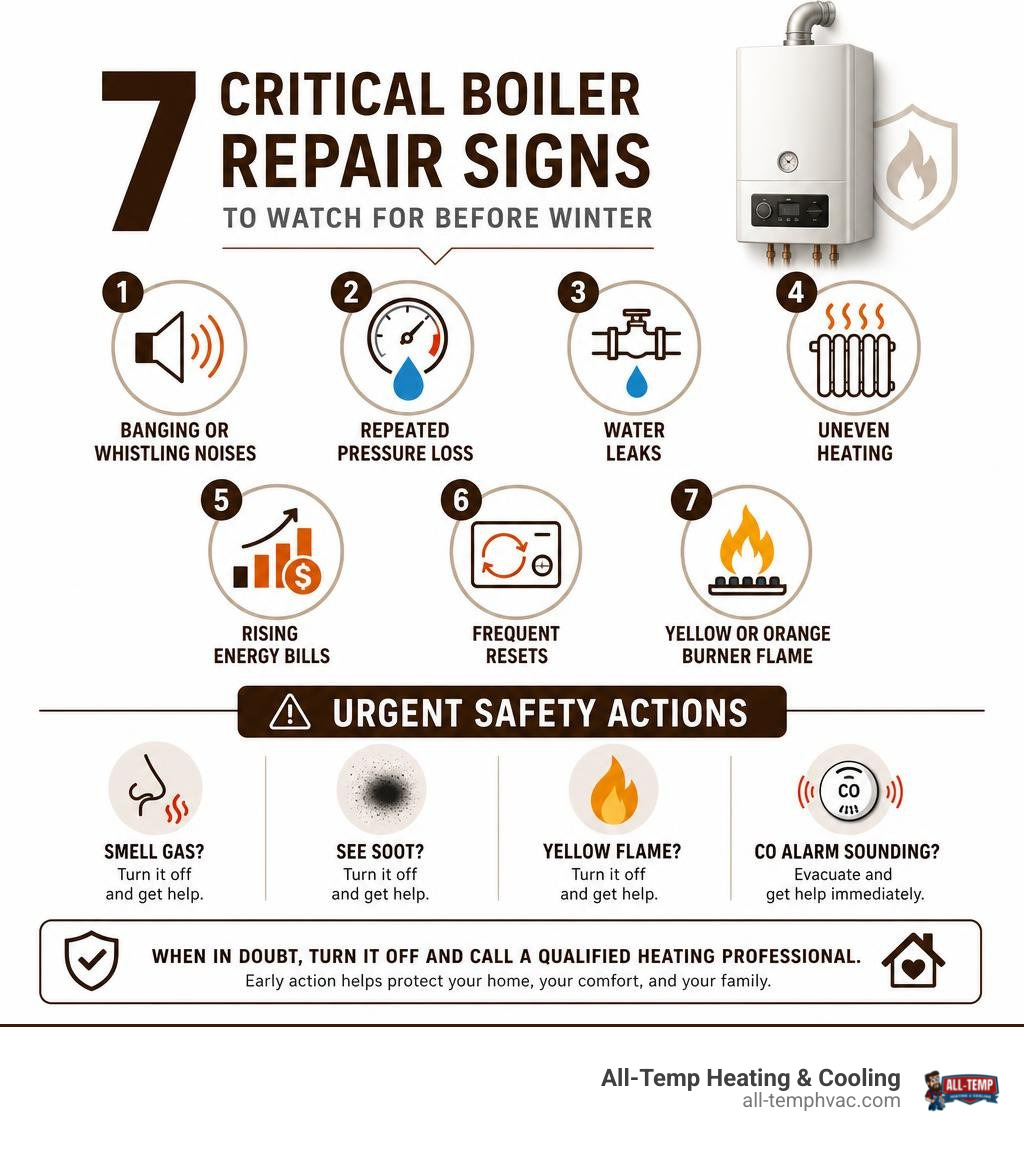
7 Critical Boiler Repair Signs to Watch For Before Winter
A reliable boiler operates in the background, providing gentle, even warmth across your living spaces. When internal components wear down or system chemistry shifts, your heating equipment leaves subtle clues before it shuts down completely. Recognizing these warnings early protects your home from sudden mid-winter freezes and prevents small mechanical faults from turning into expensive failures.
Here are the primary symptoms that indicate your heating system requires prompt professional attention.
Strange Noises: Clanging and Whistling as Boiler Repair Signs
Boilers generally run with a low, steady hum. If your mechanical room suddenly sounds like a percussion ensemble or a tea kettle at full boil, internal components are under stress.
A loud whistling or tea-kettle sound, often called “kettling,” happens when mineral scale builds up on the heat exchanger. As water passes through restricted pathways, it reaches boiling temperatures too soon, generating localized steam bubbles that pop violently.
When a boiler makes banging sounds, it is often caused by trapped air pockets, system pressure imbalances, or water hammer from malfunctioning zone valves. Worn circulation pump bearings can also produce squealing or vibrating noises. Left unaddressed, localized overheating from scale buildup can crack the heat exchanger.
Pressure Drops and Water Leaks as Boiler Repair Signs
Hydronic systems rely on consistent internal pressure to circulate hot water through your pipes, baseboards, or radiators. For most residential closed-loop hot water systems, normal cold pressure sits between 12 and 18 psi, roughly 1.0 to 1.5 bar.
If you notice that your boiler pressure keeps dropping below 12 psi, the system is losing water somewhere. Even a pinhole leak in a radiator pipe, a failing pressure relief valve, or a compromised expansion tank diaphragm will depressurize the system.
Visible pooling water around the boiler base, rust streaks along pipe fittings, or green corrosion on copper joints are immediate red flags. Water leaks speed up external metal corrosion and introduce fresh, oxygen-rich makeup water into the loop, creating rapid internal rust.
If you see these signs before cold weather settles into Staunton or Harrisonburg, schedule professional boiler repair before the issue leaves your home without heat.
Yellow or Flickering Burner Flame
A properly calibrated gas boiler burns with a crisp, steady blue flame. This blue hue indicates complete combustion, meaning the fuel burns cleanly with the correct ratio of oxygen.
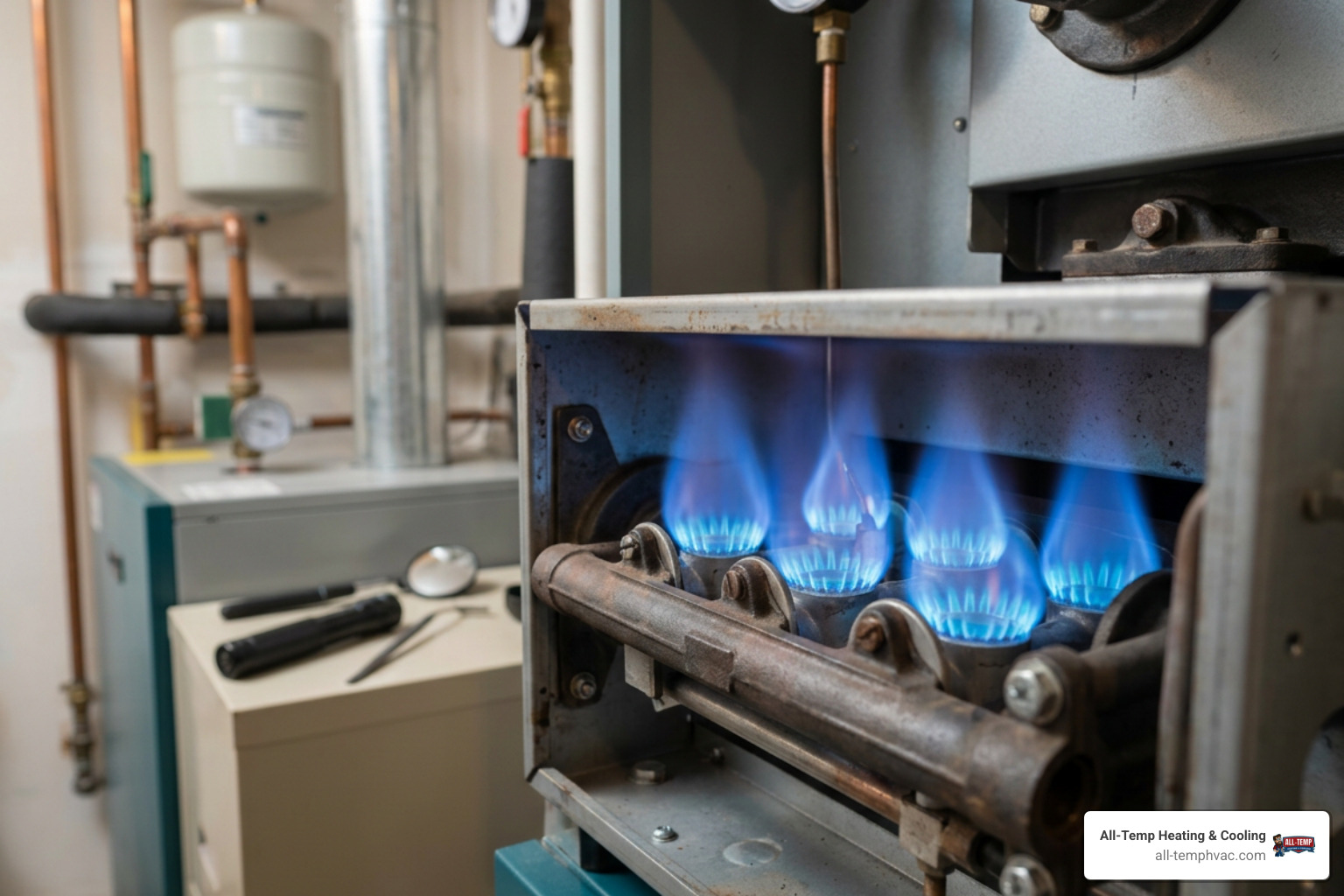
If the flame appears yellow, orange, or flickers lazily, the fuel is not burning completely. Incomplete combustion produces soot and, more dangerously, carbon monoxide, which is a colorless, odorless gas. You can learn more about how to prevent carbon monoxide leaks through routine combustion analysis and safety checks.
If you observe a yellow flame or notice dark soot accumulation around the burner access door or exhaust flue, turn the boiler off immediately, ventilate the area, and call a professional technician.
Uneven Radiator Heat and Lukewarm Water
When baseboard units or radiators remain cold at the top while warming at the bottom, air is likely trapped inside the distribution network. However, if entire sections of your home stay chilly despite normal thermostat settings, the cause often runs deeper.
Over years of continuous operation, rust particles and decomposed minerals mix with system water to form a dense black iron oxide sludge. This sludge settles in radiators, blocks thermostatic radiator valves, and restricts the circulator pump.
Sudden Spikes in Energy Bills
A heating system that is losing mechanical efficiency consumes more fuel to generate the same level of comfort. If your winter gas or oil bills jump noticeably compared to the same period in previous years, without a drastic drop in outdoor temperatures, your boiler is struggling.
Limescale deposits on the heat exchanger act as an unwanted insulating barrier. The burner must run longer and burn more fuel just to transfer heat into the circulating water. Fouled burner nozzles, incorrect air-to-fuel ratios, and short cycling all waste energy and drive monthly operating costs higher.
Unpleasant Odors and Gas Leak Concerns
A well-maintained heating system should not emit strong or persistent smells. Certain odors point toward urgent safety concerns:
- Rotten eggs or sulfur: Natural gas providers add mercaptan to fuel so leaks can be smelled easily. If you detect this scent, evacuate the property immediately and contact your gas utility from outdoors.
- Metallic or electrical burning: Overheating wiring, failing circulator motors, or stuck relays produce an acrid, sharp odor.
- Musty, stale dampness: Chronic water leaks behind boiler jackets or underneath flooring create localized mold and mildew growth.
- Faint chemical or exhaust fumes: Blocked chimney flues or cracked heat exchangers can push combustion byproducts back into living areas.
Frequent Short Cycling and Constant Resetting
Short cycling occurs when a boiler turns on, fires for a few minutes, and shuts down abruptly before satisfying the thermostat’s target temperature.
This rapid cycling places excessive wear on the ignition assembly, gas valve, and heat exchanger. Common causes include an oversized boiler, a failing internal high-limit safety switch, a stuck zone valve, or a malfunctioning thermostat. If you find yourself repeatedly pushing the red safety lockout reset button, the system is actively preventing a dangerous operating condition. Pressing reset multiple times can flood the combustion chamber with unburned fuel, so always call a technician for diagnostics instead.
Distinguishing Minor Boiler Issues From Imminent System Failure
Not every boiler noise or temperature variation requires a complete system overhaul. Distinguishing between a minor adjustment and a serious breakdown helps you take the right action.
Trapped air in a single radiator is a minor maintenance issue. You can often release the air pocket using a radiator bleed key until a steady stream of water emerges. Similarly, an uncalibrated room thermostat or a dead thermostat battery can cause minor temperature swings that are simple to fix.
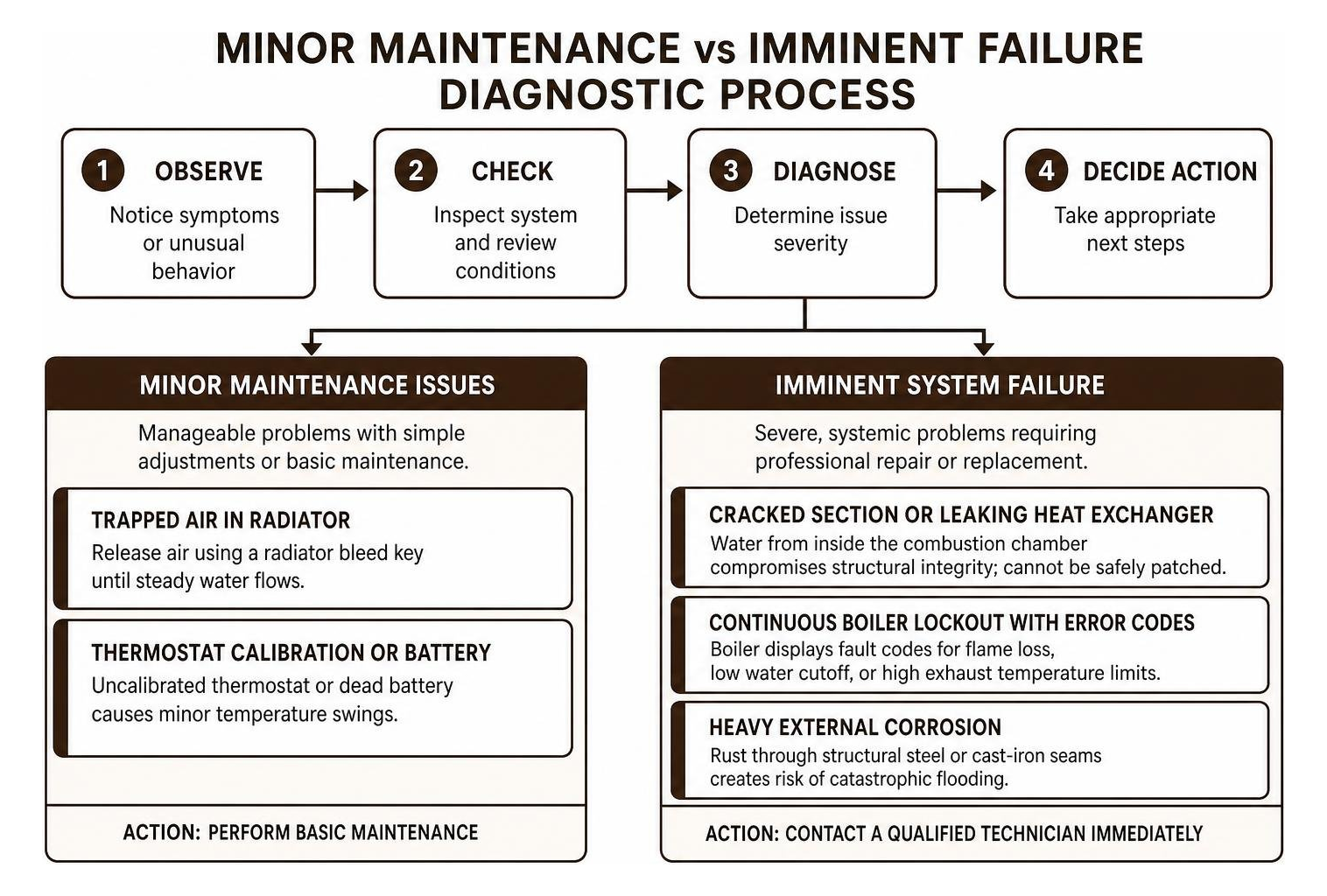
In contrast, imminent system failures present severe, system-wide symptoms:
- A cracked cast-iron section or leaking internal heat exchanger: Water pouring from inside the sealed combustion chamber compromises structural integrity and cannot safely be patched.
- Continuous boiler lockout with error codes: Modern boilers display specific fault codes for flame loss, low water cutoff, or high exhaust temperature limits.
- Heavy external corrosion along the boiler shell: Once rust eats through structural steel or cast-iron seams, major flooding becomes a genuine risk.
The following table breaks down how everyday maintenance compares with critical system failures:
| Symptom Category | Minor Issue (Routine Repair) | Imminent Failure (Emergency Service) |
|---|---|---|
| Noise | Gentle gurgling in distant pipes, such as trapped air | Loud metal banging, kettling, or grinding motor bearings |
| Water & Pressure | Slow drop over several months requiring minor top-up | Rapid daily pressure loss or water pooling under the unit |
| Combustion | Slight dust smell on initial autumn startup | Yellow flame, soot deposits, or carbon monoxide alarm activation |
| Operation | Single cold radiator in an upstairs room | Constant short cycling, system lockout, or zero heat throughout |
Boiler Repair vs. Replacement: Making the Right Call
When facing a major repair quote, evaluating the age and overall efficiency of your current equipment is crucial. Furnaces typically last 15 to 20 years, while traditional cast-iron boilers can operate for 20 to 30 years or more with meticulous care. However, steel boilers and modern compact units usually carry a lifespan of 15 to 20 years.
A practical guideline is the 50% rule: if the estimated repair cost approaches 50% of the cost of a new heating system, or if the unit is more than 15 years old and requires recurring service visits, replacement is often the smarter financial move.

Older non-condensing boilers installed in the 1990s or early 2000s typically waste more fuel than modern high-efficiency equipment. Upgrading to a condensing boiler with a higher AFUE rating can help reduce fuel use, improve comfort, and lower long-term operating costs.
Homeowners throughout the Shenandoah Valley weighing their options can schedule a detailed consultation for boiler repair in Harrisonburg to evaluate repair feasibility versus modern high-efficiency replacements.
If your older boiler also struggles to keep the whole home warm, our heating repair team can inspect the system, explain the safest repair options, and help you decide whether replacement makes more sense.
Frequently Asked Questions About Boiler Troubleshooting
How often should a home boiler be serviced?
A residential boiler should receive a comprehensive professional tune-up once every year, ideally in late summer or early fall before the first cold snap arrives.
During an annual inspection, technicians clean the heat exchanger, test safety relief valves, inspect the expansion tank, check water chemistry, and calibrate the burner flame for complete combustion. Regular servicing keeps equipment operating safely, preserves manufacturer warranty coverage, and prevents emergency breakdowns. Scheduling an early autumn heater tune up in Staunton VA ensures your system is clean, safe, and ready for sub-freezing temperatures.
What causes a boiler to make kettling sounds?
Kettling is primarily caused by limescale, calcium, and mineral buildup inside the narrow waterways of the boiler’s heat exchanger. In hard water areas, dissolved minerals precipitate out of the water when exposed to high heat, creating a hard crust on metal surfaces.
This scale restricts water flow, causing trapped water to overheat, vaporize, and produce steam bubbles that generate loud rattling or whistling sounds as they collapse. A qualified heating technician can resolve this issue by descaling the heat exchanger with specialized cleaning chemicals or executing a full system power flush.
Why does boiler pressure keep dropping below 1 bar?
Boiler pressure drops below 1 bar, or below 12 to 15 psi, when water escapes from the sealed heating circuit. Common culprits include:
- A leaking pressure relief valve discharging water externally
- Pinhole leaks in hidden subfloor copper pipes or radiator connections
- A degraded internal rubber bladder inside the expansion tank
- Corroded boiler heat exchanger sections leaking directly into the combustion chamber
If repressurizing the system through the filling loop only restores pressure temporarily, avoid repeated manual filling. Introducing untreated tap water repeatedly adds fresh oxygen and minerals, worsening corrosion and scaling. Have a professional locate and repair the leak source.
Prepare Your Heating System for Winter
Catching boiler issues before sub-freezing weather arrives in the Shenandoah Valley keeps your home warm, protects your budget, and prevents unexpected heating emergencies. Whether your system needs air purged from radiators, a new expansion tank, or heat exchanger descaling, taking action early prevents extensive damage to your property.
Our team at All-Temp Heating & Cooling serves homeowners across Staunton, Harrisonburg, Waynesboro, Stuarts Draft, Bridgewater, Elkton, Fishersville, Verona, and surrounding communities. We bring honest recommendations, advanced diagnostic tools, and a two-year labor warranty to every project.
If your heating system is showing any of these early warning signs, contact our professional boiler repair technicians today to schedule a thorough diagnostic inspection before winter sets in.