
Why High Home Humidity Needs Quick Attention
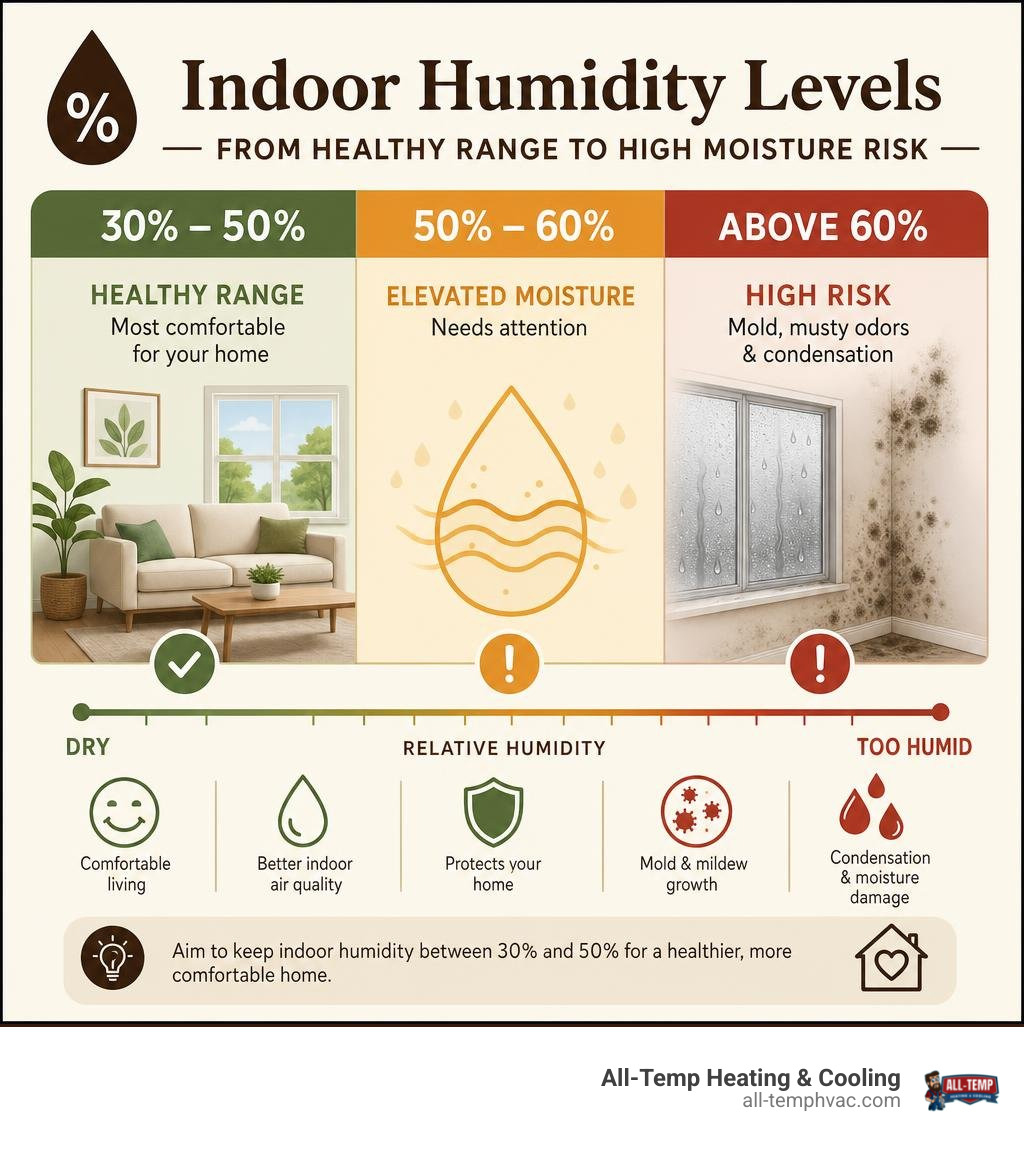
If your home humidity too high, aim to bring indoor relative humidity down to 30% to 50%. Readings that stay above 60% can make your home feel sticky, encourage mold and dust mites, and lead to condensation or moisture damage.
| Indoor humidity level | What it means |
|---|---|
| 30% to 50% | Healthy target range for most homes |
| 50% to 60% | Elevated moisture that needs attention |
| Above 60% | High risk for mold, musty odors, and condensation |
Relative humidity is the amount of water vapor in the air compared with the most moisture the air can hold at its current temperature. High humidity can make a room feel warmer than the thermostat says, even when the AC is running.
At All-Temp Heating & Cooling, our team has helped Staunton-area homeowners solve home humidity too high concerns for more than 15 years. We see how excess moisture can affect comfort, indoor air quality, and HVAC performance, which is why finding the source matters.
Ideal Indoor Relative Humidity and How to Measure It
Managing moisture starts with understanding normal humidity levels. The U.S. Environmental Protection Agency (EPA) recommends keeping indoor relative humidity between 30% and 50%. When relative humidity stays in this window, your home feels comfortable, skin stays hydrated without feeling clammy, and structural materials remain dry.
Indoor moisture levels naturally rise during humid summers in Virginia, especially in areas like Charlottesville and Harrisonburg. When indoor relative humidity climbs past 50%, moisture starts to build up on cool surfaces. Once levels cross 60%, conditions become ideal for mold growth and allergy triggers.
Maintaining the best home humidity and temperature level helps protect your health and your building materials year round. This balance also lowers energy usage because your AC does not have to work as hard to keep you cool.
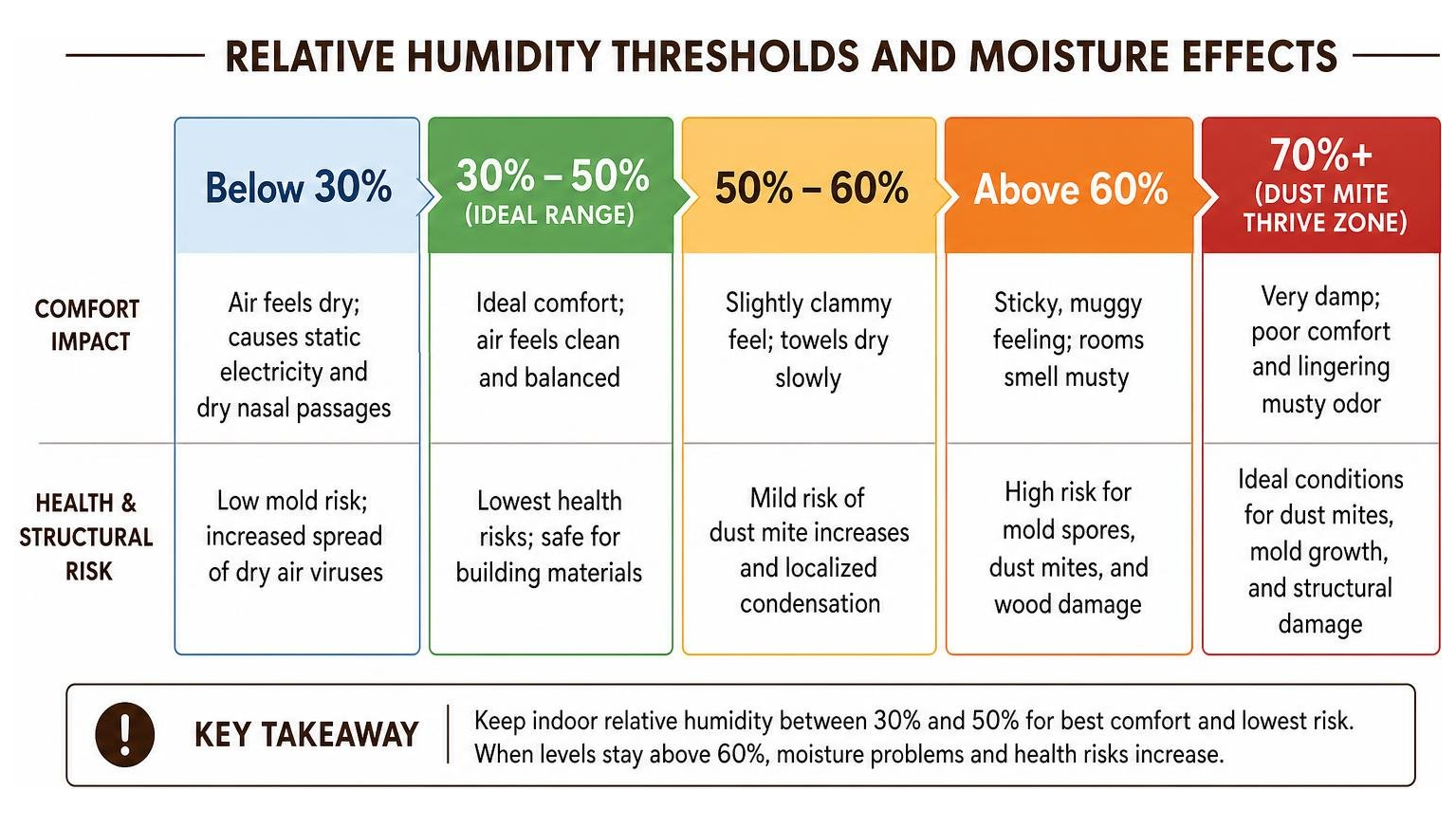
| Humidity Percentage | Comfort Impact | Health and Structural Risk |
|---|---|---|
| Below 30% | Air feels dry; causes static electricity and dry nasal passages | Low mold risk; increased spread of dry air viruses |
| 30% to 50% | Ideal comfort; air feels clean and balanced | Lowest health risks; safe for building materials |
| 50% to 60% | Slightly clammy feel; towels dry slowly | Mild risk of dust mite increases and localized condensation |
| Above 60% | Sticky, muggy feeling; rooms smell musty | High risk for mold spores, dust mites, and wood damage |
Understanding Relative Humidity Thresholds
Relative humidity changes with air temperature. Warm air can hold much more moisture than cold air. When warm, damp air cools down, it loses its ability to hold water vapor, which causes drops of liquid water to form on walls, windows, and pipes.
The danger zone begins when indoor humidity stays above 60%. At this point, biological pollutants like dust mites thrive. Dust mites prefer relative humidity levels of 70% or higher, but keeping levels below 60% keeps their numbers down.
Winter requires adjusted targets. Guidelines from the American Society of Heating, Refrigerating and Air-Conditioning Engineers (ASHRAE) suggest lowering indoor humidity as outdoor temperatures drop. When outdoor temperatures fall to 20 degrees Fahrenheit, indoor relative humidity should drop to about 35% to prevent frost and window condensation.
How to Accurately Measure Humidity at Home
Checking your home’s moisture level is quick and affordable. A digital hygrometer costs very little and provides real-time relative humidity readings.
- Place digital hygrometers four to six feet above the floor on interior walls.
- Keep sensors away from direct sunlight, supply vents, and exterior doors.
- Keep units out of bathrooms and kitchens to avoid false spikes.
- Track readings across three consecutive days to spot baseline moisture levels.
Smart thermostats often feature built-in humidity sensors. Placing sensors in your main living space and basement helps identify local moisture problems. If your living room reads 48% relative humidity while your basement reads 68%, you know exactly where to take action.
Why Is Your Home Humidity Too High?
Excess indoor moisture comes from two main sources: activities inside your house and damp outdoor air sneaking through building gaps.
Unsealed crawl spaces, leaky foundations, and poor roof drainage allow moisture to seep into your living spaces. Everyday habits like taking hot showers, boiling water, and drying laundry indoors also add gallons of water vapor into the air each day.
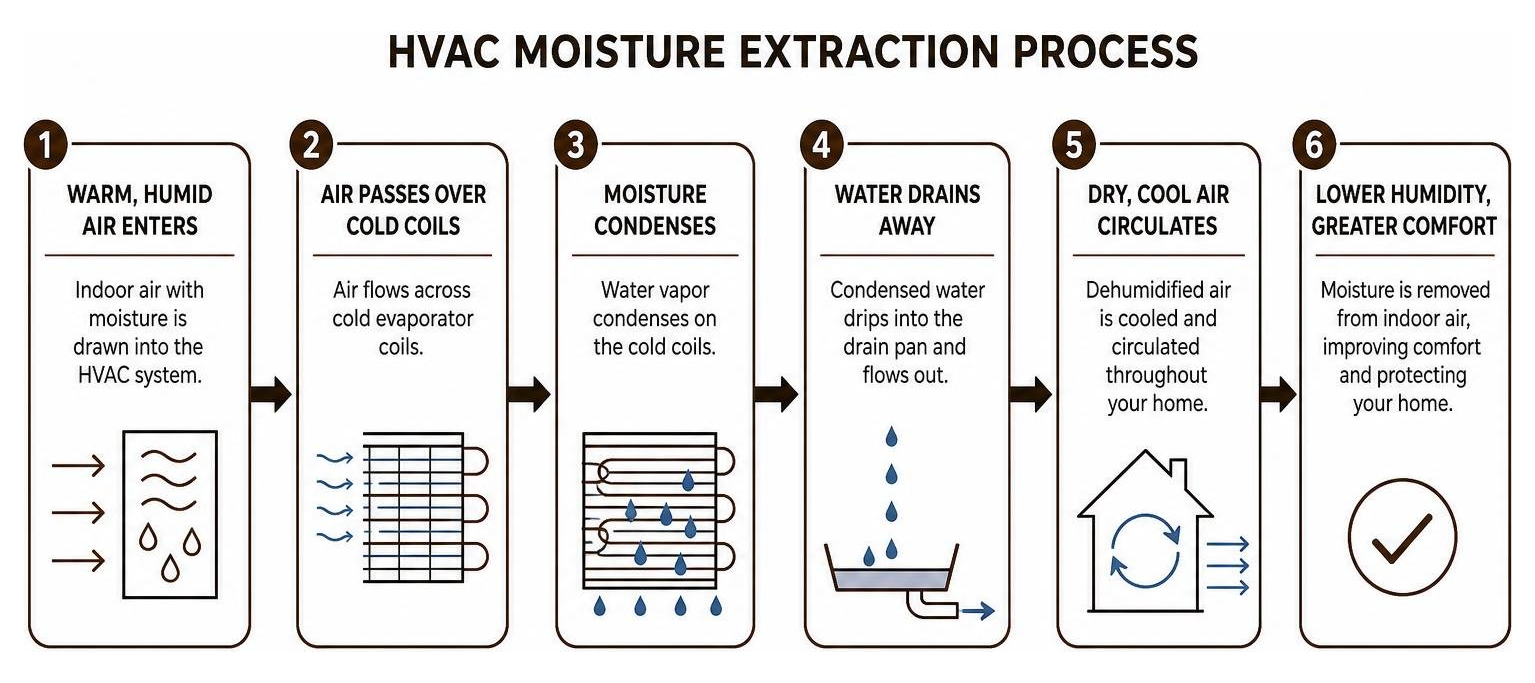
When your home humidity too high, your HVAC system should naturally pull water out of the air while cooling. If the equipment is oversized, faulty, or poorly maintained, it fails to dehumidify properly.
Primary Causes When Home Humidity Is Too High
Everyday activities add surprising amounts of water vapor to your indoor air. A single load of wet laundry air-drying on a rack indoors releases up to half a gallon of moisture into your living space.
Showering, bathing, and boiling water without running an exhaust fan dump moisture straight into your air. Storing wet shoes, damp umbrellas, and unvented firewood inside also raises humidity levels.
Ground moisture is another major cause in places like Waynesboro and Fishersville. Uncovered dirt floors in crawl spaces let soil moisture evaporate straight up into floor joists and living quarters. Rainwater that pools near foundation walls due to clogged gutters slowly seeps through porous basement concrete.
HVAC Issues That Cause Moisture Accumulation
Your AC serves as your primary defense against summer humidity. When warm air passes across cold evaporator coils, water condenses and flows out through a drain line. However, specific system problems prevent this process from working.
An oversized cooling unit cools your home too quickly. It turns on, blasts cold air for a few minutes, and shuts off before it completes a full dehumidification cycle. Recognizing why AC short cycling happens can prevent lingering moisture issues in your living spaces.
Thermostat settings also affect indoor air moisture. Setting your thermostat fan to ON causes the fan to run continuously, even when the cooling cycle stops. This blows water trapped on the wet evaporator coil right back into your rooms. Always set your thermostat fan to AUTO so moisture can drain properly.
When an AC unit runs continuously without lowering humidity, dirty coils or low refrigerant levels may be the cause. Schedule prompt service when you notice your AC not dehumidifying your home to restore comfort and efficiency.
Health Hazards and Structural Risks of Excess Moisture
High indoor humidity affects both your family’s health and your home’s structural integrity. When relative humidity stays above 60%, mold spores can germinate on organic surfaces within 24 to 48 hours.
Moisture trapped in air also makes rooms feel much warmer than they actually are. This forces homeowners to turn down the thermostat, which increases cooling energy costs without solving the moisture problem.
Health Impacts of Living with High Moisture
Living in high humidity creates an ideal environment for biological indoor air pollutants. Dust mites thrive in warm, damp conditions, feed on dead skin cells, and shed particles that trigger severe allergies and asthma.
Moist air also concentrates airborne allergens and mold spores, leading to chronic upper respiratory irritation, coughing, throat dryness, and eye inflammation. High humidity can even interfere with natural body cooling during sleep, causing restlessness and poor sleep quality.
Our indoor air quality and health article explains why keeping indoor humidity under 50% matters for children, older adults, and family members with allergies or asthma.

Property and Structural Damage Risks
Excess moisture slowly weakens key building materials throughout your house. Wood subfloors, trim work, and hardwood flooring absorb water vapor from damp air, causing them to warp, cup, or buckle over time.
- Window frames rot as condensation trickles down glass panes.
- Wall paint blisters and peels away from damp drywall surface layers.
- Mold grows on grout lines, bathroom drywall, and closet corners.
- Stored cardboard boxes, paper goods, and fabrics absorb moisture and smell musty.
- Carpeting absorbs humidity, creating mildew hidden within underlayment padding.
Over time, unaddressed moisture leads to costly structural repairs, damaged personal possessions, and degraded indoor surfaces.
How to Fix High Indoor Moisture Levels Room by Room
Fixing high humidity requires targeted adjustments in areas where moisture originates. Bathrooms, kitchens, and basements generate the highest latent moisture loads, making them the primary focus for humidity control.
Using simple habits alongside proper ventilation helps remove excess moisture before it spreads to adjacent living spaces.
Dehumidifying Bathrooms, Kitchens, and Basements
Bathrooms generate heavy steam during baths and showers. Run your exhaust fan throughout your shower and leave it running for at least 20 minutes afterward to clear air volume completely. Squeegeeing shower walls and glass after use removes standing water so it cannot evaporate back into the room.
In the kitchen, cover pots and pans with tight lids while boiling liquids to contain steam. Always run a range hood that vents directly to the outside rather than recirculating air back into your kitchen. Avoid opening the dishwasher immediately after a hot wash cycle finishes. Let dishes cool inside to contain steam.
Basements and crawl spaces in communities like Stuarts Draft and Augusta County absorb soil moisture through concrete walls and dirt floors. Cover open dirt floors in crawl spaces with thick plastic sheeting to block ground evaporation. In basements, run a dedicated compressor dehumidifier with a continuous drain hose set between 45% and 50% relative humidity.
Long-Term Solutions When Home Humidity Is Too High
If short-term fixes do not lower moisture levels, structural and mechanical solutions offer permanent results. Whole-house dehumidifiers integrate directly into your existing duct system, pulling gallons of water out of incoming air regardless of AC run time.
Modern air-source heat pumps provide efficient cooling and moisture management. Heat pumps adjust cooling output to run longer, low-speed cycles that extract maximum moisture without over-cooling interior spaces.
Sealing building leaks and adding attic insulation keeps humid outdoor air from entering your home. Sealing foundation gaps, rim joists, and attic access hatches stops warm air leaks that strain your HVAC equipment.
Comparing equipment options in our humidifiers vs dehumidifiers guide helps you choose the right system for your home’s needs.
Regular professional maintenance ensures your cooling equipment removes moisture efficiently every season. Scheduling comprehensive air conditioning services keeps your cooling system operating at peak dehumidification capacity.
If your air feels sticky or heavy, our team provides reliable indoor air quality services to assess your home’s air quality and recommend appropriate fixes.
Frequently Asked Questions About Indoor Moisture
What is the fastest way to lower humidity in a house?
The fastest way to lower indoor humidity quickly is to turn on your AC while running spot exhaust fans in the kitchen and bathrooms. Close all exterior windows and doors to block damp outdoor air.
If you have a portable dehumidifier, place it in the center of the dampest room and set it to a target relative humidity of 45%. Avoid boiling water, taking hot showers, or air-drying clothes inside until humidity drops.
Should I use an air conditioner or a dehumidifier?
Use your AC when your home feels both hot and humid. Air conditioners remove moisture as a natural byproduct of cooling interior air.
Use a dedicated dehumidifier when your home feels cool but damp or clammy, which often happens in basements, crawl spaces, and during mild spring or fall days. Combining an AC system with a whole-house dehumidifier keeps indoor humidity under control year round without over-cooling your home.
At what humidity level does mold start growing in a home?
Mold can start growing at relative humidity levels above 55%, but the risk increases significantly once indoor relative humidity reaches 60%. At relative humidity levels of 70% or higher, mold growth accelerates rapidly on organic materials like drywall, carpet, ceiling tiles, and wood framing.
The EPA recommends keeping humidity levels strictly below 50% to prevent mold colonization. Dry any wet building surfaces within 24 to 48 hours to stop mold spores from taking root.
Restoring Comfort to Your Home
Managing indoor moisture is essential for home comfort, structural integrity, and family health. Keeping relative humidity between 30% and 50% reduces mold risks, lowers allergen levels, and helps your cooling equipment run efficiently.
Simple actions like using exhaust fans, fixing plumbing leaks, and setting your thermostat fan to AUTO make an immediate difference. For long-term protection, whole-home dehumidification systems and air sealing provide lasting moisture control.
If your home stays damp, sticky, or warm despite your best efforts, All-Temp Heating & Cooling is ready to help. Our team brings years of hands-on experience to homes across Staunton, Harrisonburg, Waynesboro, and surrounding areas. Contact our indoor air quality specialists to schedule a home humidity assessment and get your home feeling comfortable again.